Every day, businesses and governments around the world are becoming increasingly reliant on America’s frontier models. Startup CEOs already can’t imagine running their companies without AI, and it won’t be long until the same is true for every other organization in the world.
At the same time, it’s become abundantly clear that access to frontier models is at the mercy of Anthropic, OpenAI, and the United States government. Fable 5 was temporarily banned by the USG, and GPT 5.6 and Astra were similarly delayed. Both models have cyber, bio, and other safety safeguards that, though well-intentioned, often prevent good users from completing harmless tasks. Given recent security incidents and general worries about increasingly powerful AI, it is extremely likely that frontier model usage will only become more restricted from here. In fact, we believe it’s plausible OpenAI/Anthropic will eventually stop offering API access entirely for their most capable models.
Open source seems like the obvious solution to all these dependency concerns, but it’s far from a silver bullet. First, all the “open source” licenses are starting to become increasingly restrictive. As just one example, any “model as a service business” making over $20M a year must negotiate a separate agreement with Moonshot to serve Kimi K3. Second, just because a lab open sources their models today doesn’t guarantee they’ll continue doing so in the future. Imagine if in 2028, you’re stuck with 2027 level intelligence for some extremely high-value use case because no relevant model is open source and everything has to stay on-prem for security reasons. It’s kind of like having your Fable request downgraded to Opus except 100x worse.
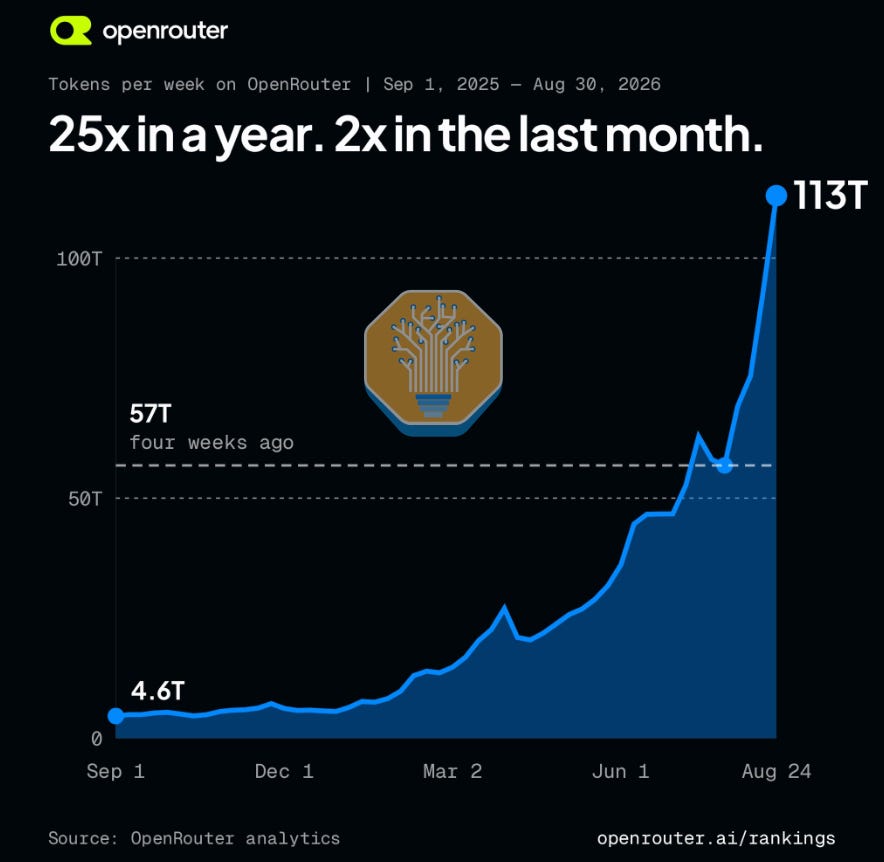
Open source token volumes have increased significantly over the past month. Source: OpenRouter
The only way to fully address these concerns is to pretrain your own model that runs on your own GPUs. Until now, this has largely been a question for companies: do the potential benefits justify the enormous investment required? Soon, however, this same calculation will confront every major nation state.
Today, we’ll do a deep dive on South Korea’s sovereign AI efforts. Beyond being home to two of the most important companies in the AI supply chain, Korea also has a long tradition of technological self-reliance (as any foreigner that’s had to use Naver Maps knows) and is currently the clear leader in sovereign AI.
From there, we’ll discuss the two major implications for investors: why Nvidia is sovereign AI’s largest supporter and why Korea’s ambitions may not be aligned with Samsung and Hynix shareholders.
Korean Squid Games - National AI Tournament: attempting to build a domestic frontier model
In June 2025, the Korean government announced “독자 AI 파운데이션 모델”, or the “Independent AI Foundation Model” project. As the name suggests, the goal is to develop a model that Korean organizations can train, modify, and operate without depending on a foreign AI lab.
这个项目最有趣的地方或许在于它的结构。政府没有预先选定单一的国家级冠军企业,而是举办了一场锦标赛。所有参与者都能获得 AI 三大支柱——算力、数据和研究人员——方面的补贴,并且每 6 个月接受一次评估。在每一阶段,落败者将被淘汰,其资源也会被重新分配给获胜者。
这场竞赛最初有 15 个联合团队参加。其中 10 个通过了初步文件审查,最终在 2025 年 8 月有 5 个团队入选:Naver Cloud、LG AI Research、SK Telecom、NC AI 和 Upstage。大多数读者可能对这些公司的 AI 研发完全不了解,但其中一些团队其实相当有实力。例如,SKT、LG 和 Naver 在 ChatGPT 问世之前就已经预训练过自己的 LLM。
Naver maintained that they’d already developed their own encoders and could replace the Qwen pieces at any time, but the government was predictably stringent and refused to reinstate them.
Now short 1 team, the Korean government decided to host a supplemental competition to find a new 4th contestant and ultimately selected Motif Technologies, a neolab that spun out of Moreh, a Korean AI infra software company—in February 2025.
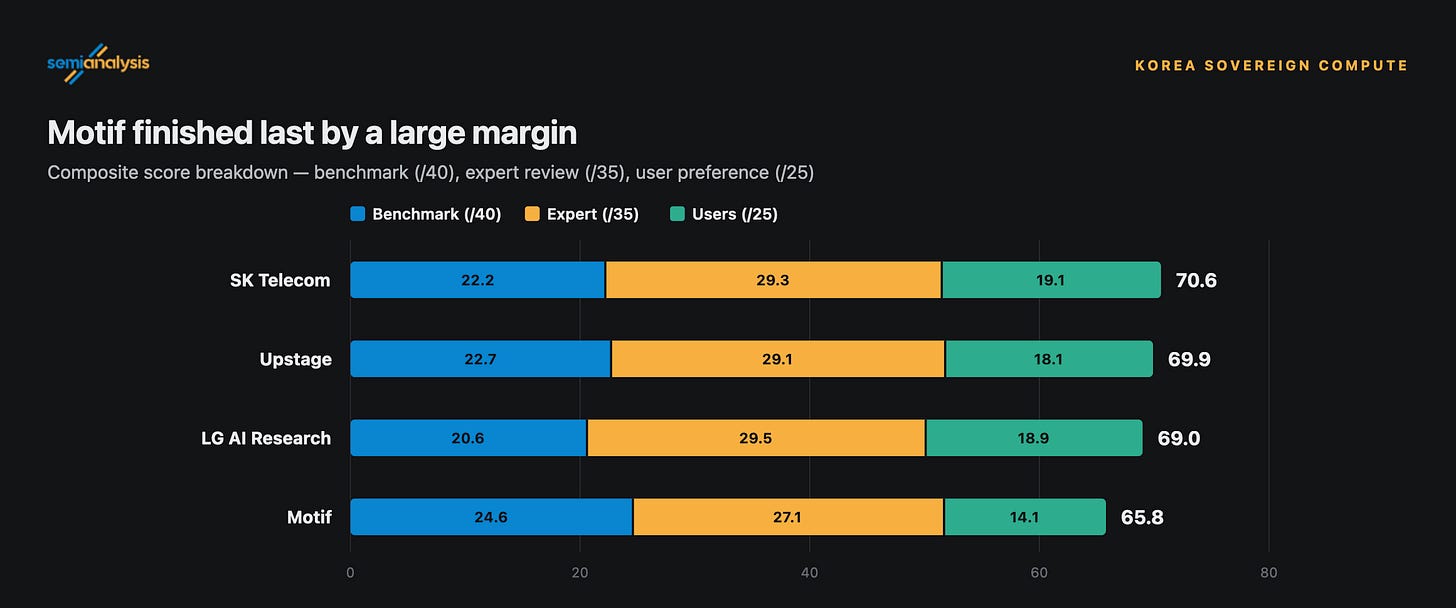
All 4 companies open sourced their newest models in July and the results for the most recent round were announced on August 18th. But before we spoil the results, let’s take a look at the models.
So how good are their models?
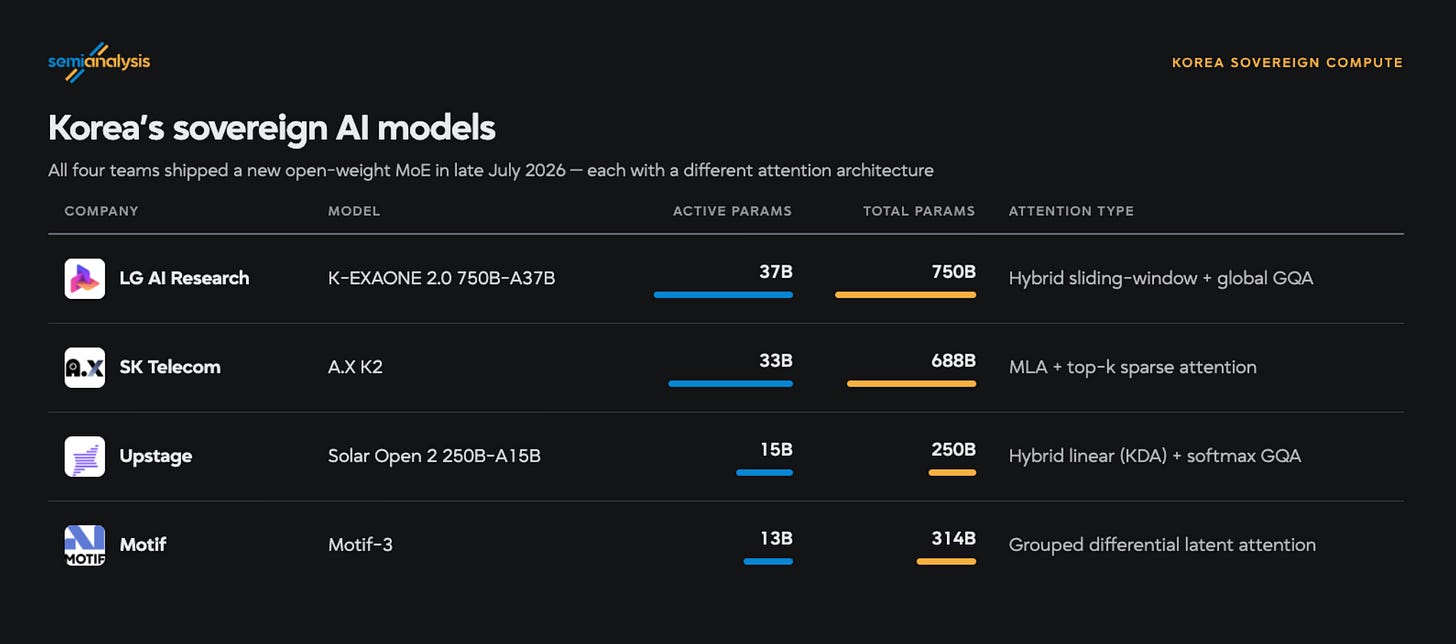
Here’s an overview of the 4 models:
Source: SemiAnalysis
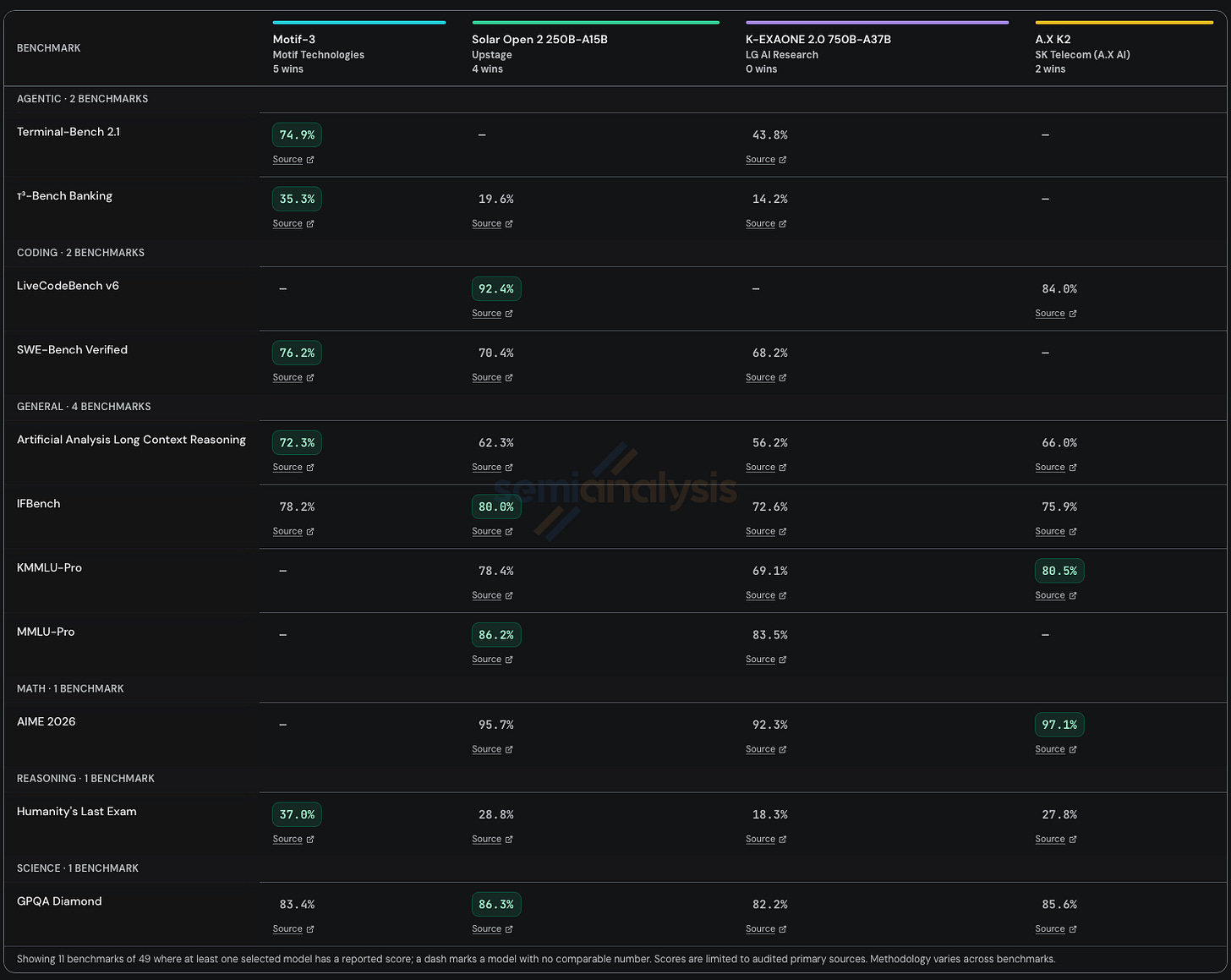
And here’s how they compare on the benchmarks:
Source: SemiAnalysis Tokenomics Model
As you can see, the two startups (Motif and Upstage) significantly outperformed teams backed by bona fide chaebols. The fact that their models are less than half the size is even more impressive.
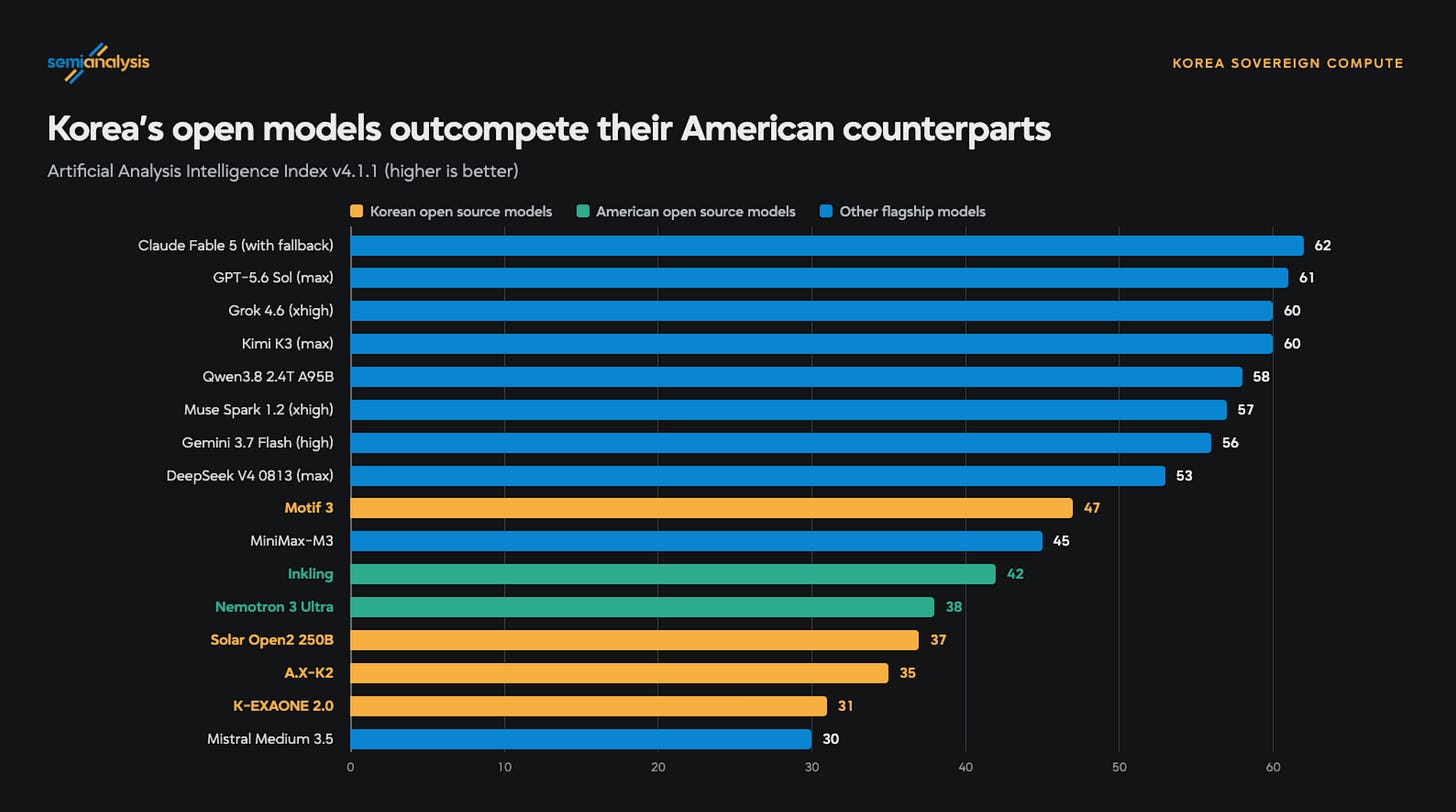
On Artificial Analysis’ Intelligence Index, Motif 3 is 10 points ahead of Upstage and by far the best Korean model. What’s even more notable, however, is the fact that it’s comfortably ahead of both Inkling and Nemotron 3 Ultra—the two best American open source models today.
Source: Artificial Analysis, SemiAnalysis
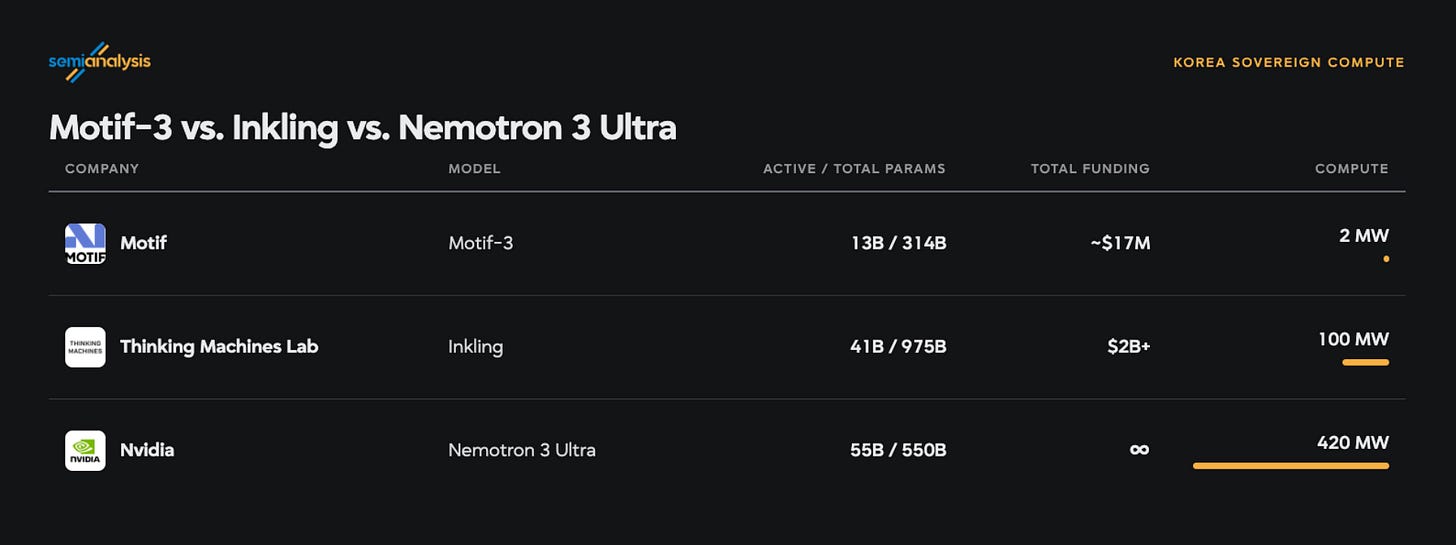
Motif is a sub 30 person startup that released their first pre-trained model, which was only 2.6B total parameters, last June. They’ve raised just $17M and have access to a mere 768 B200s (< 2MW).
In contrast, Thinking Machines is the hottest neolab around, raised $2B at $12B post for their seed, and signed a 1GW+ compute deal with Nvidia which was accompanied by additional funding. As for Nvidia itself, the resources at its disposal hardly need mentioning.
Source: SemiAnalysis
Put differently, a tiny Korean startup you’ve likely never heard of trained—from scratch and on a shoestring budge—the best non-Chinese open source model in the world .
The point here is not to diss Thinking Machines or Nvidia. Training open source models is neither of their core businesses. Instead, we want to highlight that training a near-SOTA open source model from scratch is likely less resource intensive than most think. There’s no substitute for focus, and the total compute cost to train Motif 3, including experimentation, was just ~$15M USD at today’s prices. This is obviously well within budget for every major nation state.
Questionable judgement from the Korean government
We’ve previously written in-depth about the many issues with benchmarks, but they still tend to be directionally correct. A 10+ point gap on something like the Artificial Analysis Intelligence Index has almost always corresponded to a step change improvement in model capability (e.g. GPT 4o to o1 or Opus 4.8 to Fable 5).
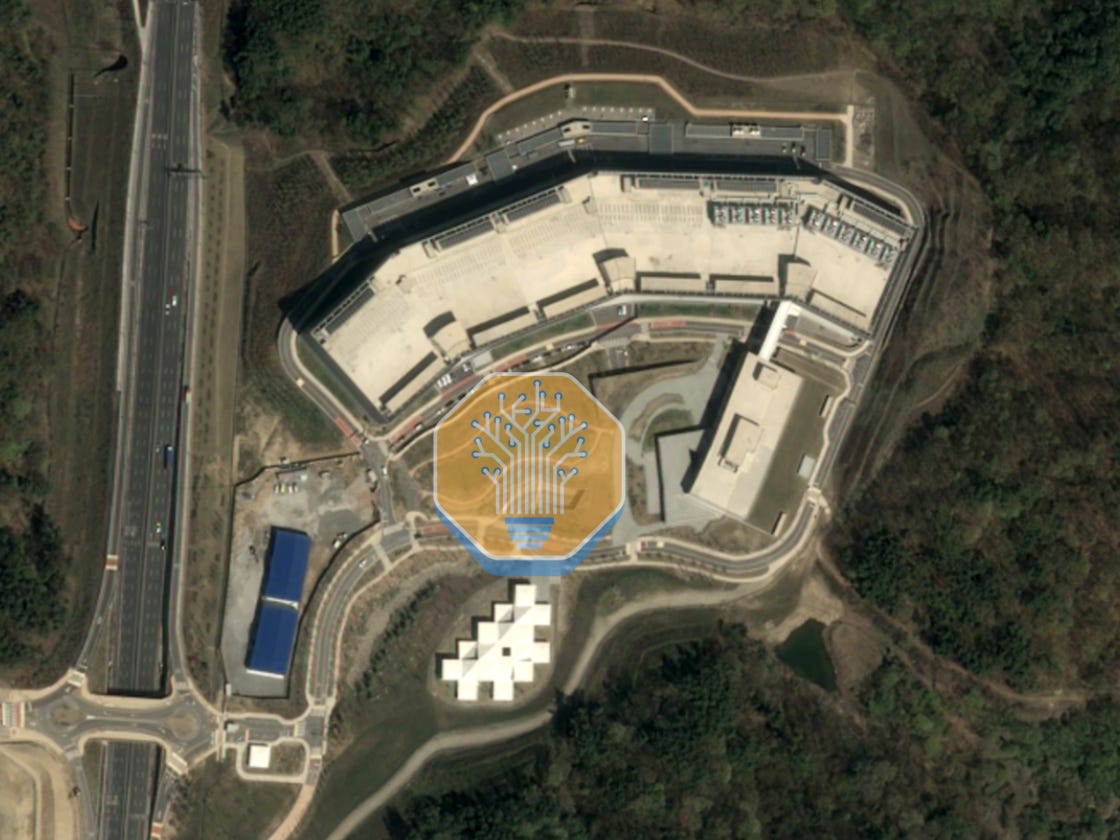
Naver’s 1GW site in Sejong, South Korea. Source: SemiAnalysis Datacenter Model
Although these timelines are aggressive, we believe they are achievable. The regulatory environment is favorable, and President Lee Jae-myung is explicitly framing AI infra as a legacy-defining project akin to Korea’s broadband push in the 1990s. Throughout the 2000s and 2010s, Korea had uniquely cheap and fast internet, which is what enabled their local search, e-commerce, and esports industries.
To be clear, not all of this capacity is intended to support Korea’s sovereign AI efforts, and much of it will likely be sold to Anthropic or OpenAI. Importantly, however, Korea will have the optionality to dramatically scale up their sovereign AI efforts if necessary, and this domestic compute ramp is something more countries outside of the US and China will likely copy.
Why Nvidia needs open source and sovereign AI
Jensen recently made his Twitter debut with a manifesto on the importance of open source AI. It was later co-signed by basically every relevant AI company except Anthropic. Here’s an excerpt:
“Our AI leadership will be judged not by one frontier AI model, but by whether the United States builds a strong, open ecosystem that diffuses into every sector. This is essential for creating opportunities for innovation and prosperity across the country. It requires expanding access to AI, encouraging competition, robust application layers, and giving Americans greater control over the technology they rely on. Open weight models—AI models that anyone can download, inspect, modify, and run on their own infrastructure—are an important part of that foundation because they make advanced AI more accessible, adaptable, and widely available.”
Much of the discourse around open source AI tends to wax poetic about the democratization of intelligence and decentralization of technological power. However, look under the hood and it’s often just people talking their book.
No one needs open source AI more than Nvidia. As we previously explained to Tokenomics Model subscribers, selling frontier tokens at API prices is the highest ROI use case of incremental compute. Anthropic plus OpenAI are therefore set to take a larger and larger percentage of net new GWs in the future, and Nvidia is currently on track for a world where they only have 2 real customers. Sure maybe the number’s 7 if you include the hyperscalers, but that’s still obviously unacceptable for the world’s largest company. This is doubly true when all 7 customers except SpaceX are actively trying to build their own XPUs to cannibalize Nvidia’s margins.
One of the most famous competitive strategies in tech is to “ commoditize your complements ”. The general idea is that as something becomes cheaper and more abundant, demand for everything that goes well with it increases. This explains why companies will often “give away” things for “free”. Classic examples include 1) Google offering Chrome for free and open-sourcing Android, which increased access to the web and made search advertising more valuable and 2) Microsoft retaining the right to license MS-DOS to IBM’s competitors, which helped turn the PC into a commodity hardware platform.
In Nvidia’s case, AI models and applications are the complements to its GPUs. The long-term health of their business depends on a vibrant, diverse AI ecosystem that exists outside of just Anthropic and OpenAI.
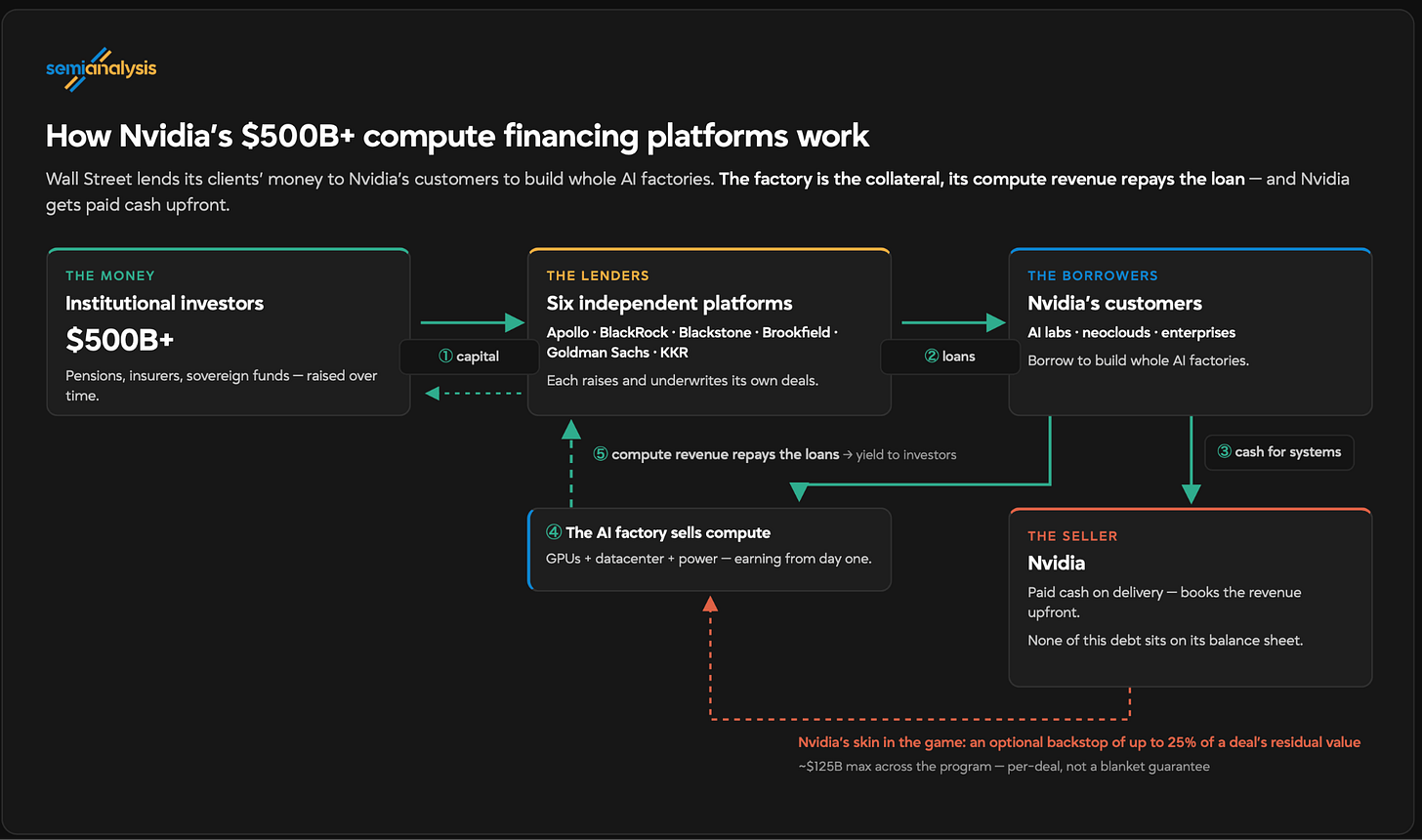
Their recently announced $500B MOU with the world’s largest capital allocators is just one example of the clever financial engineering Nvidia can do to make this vision a reality. By making “Nvidia AI Factory Compute” an “investable asset class,” the SSIs and Thinking Machines of the world have a way to leverage capital from pension funds, insurance companies, and private credit firms to buy enormous amounts of compute.
Source: SemiAnalysis
Sovereign AI is another huge opportunity for Nvidia to diversify their customer base. SK Group has already committed to building 2 GWs of Rubin as part of their 5GW buildout, and Naver has signed on for another 200MW. We expect Jensen to continue announcing similar deals with additional countries.
Datacenter Bet and Memory
From a sovereign AI perspective, Korea’s investment in government- and corporate-owned data centers and GPU clusters makes complete sense. A sovereign model ultimately requires sovereign infrastructure: domestic control over where the model is trained, how it is deployed, and who can access the underlying compute.
Korea’s challenge is that it still lacks a scaled domestic provider of leading-edge accelerators. Rebellions and FuriosaAI are making some progress, but they remain objectively behind Nvidia and AMD in deployment scale, software maturity, and commercial availability. Hyperscaler-developed alternatives such as Google’s TPUs and AWS’s Trainium are not domestically controlled either.
The buildout of data centers essentially comes down to two things: capital and compute. Capital is the easier problem in our view. The Korean government has been prioritizing AI investment over the past few years, while Naver, SK Telecom, Samsung, SK Hynix, and other leading domestic tech companies are committing significant resources to data centers, AI infrastructure, and model development. Compute on the other hand, is another story. Korea can finance land, power, cooling, and buildings, but it cannot manufacture a globally competitive accelerator ecosystem just like the majority of countries in the world—or guarantee access to the latest platforms—simply by spending more money.
如果韩国的目标只是建立本国的 AI 生态系统,那么与 Nvidia 保持传统的供应商关系可能就足够了。但如果韩国想成为全球领先的主权 AI 玩家之一,就需要更深层次的合作:更清晰的路线图可见性、紧密的技术整合、可靠地获取新计算平台,以及对发展周边本土生态系统的支持。
正因如此,Nvidia 与 Samsung 和 SK Hynix 扩大合作关系在此背景下显得尤为重要。据报道,Samsung 计划建造一座使用超过 50,000 个 GPU 的 Nvidia 驱动 AI 工厂,而 SK Telecom 宣布的 2GW DSX AI 工厂预计将部署由 SK Hynix HBM4 驱动的 Vera Rubin 系统。尽管公开公告并未披露优先的 GPU 分配或保证供应量,但更深层次的战略协同应能增强韩国规划和部署前沿计算的能力——这远比单纯建造承载这些计算的数据中心要困难得多。
在此背景下,我们认为 Nvidia 的计划并不止于获得一个大型主权计算客户。正如我们此前向 Memory Model 订阅者解释的那样,我们认为韩国的基础设施建设也让 Nvidia 有机会深化与 SK Hynix 的关系——后者既是 Nvidia 最重要的内存供应商之一,也是更广泛的 SK 集团旗下的关键关联公司。我们认为 Nvidia 很可能已经就 SOCAMM 达成了长期协议,并锁定了有利的 HBM 定价以及 2027 年的大额采购承诺,不过最终谈判结果可能与我们目前的估计有所不同。