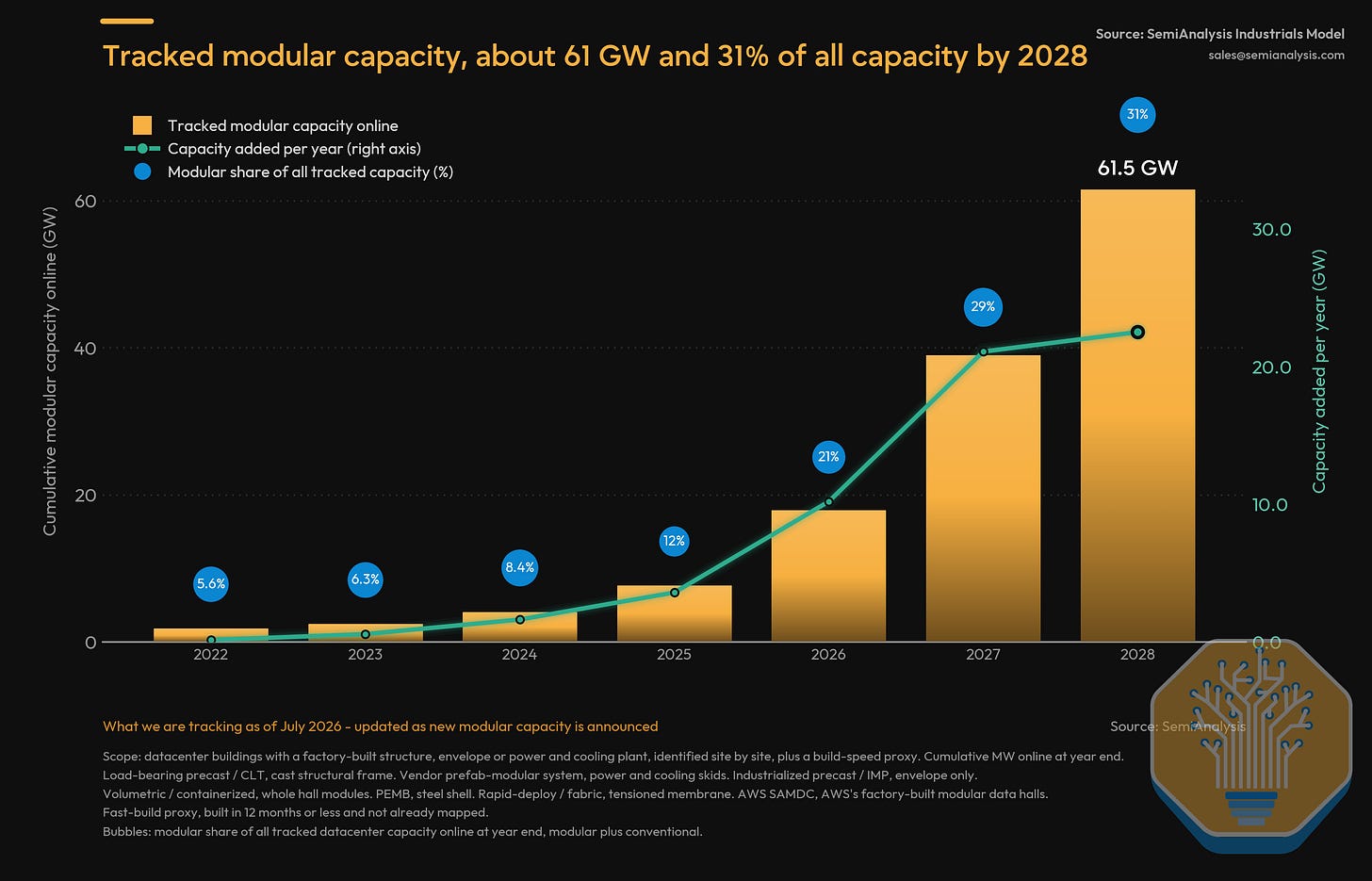
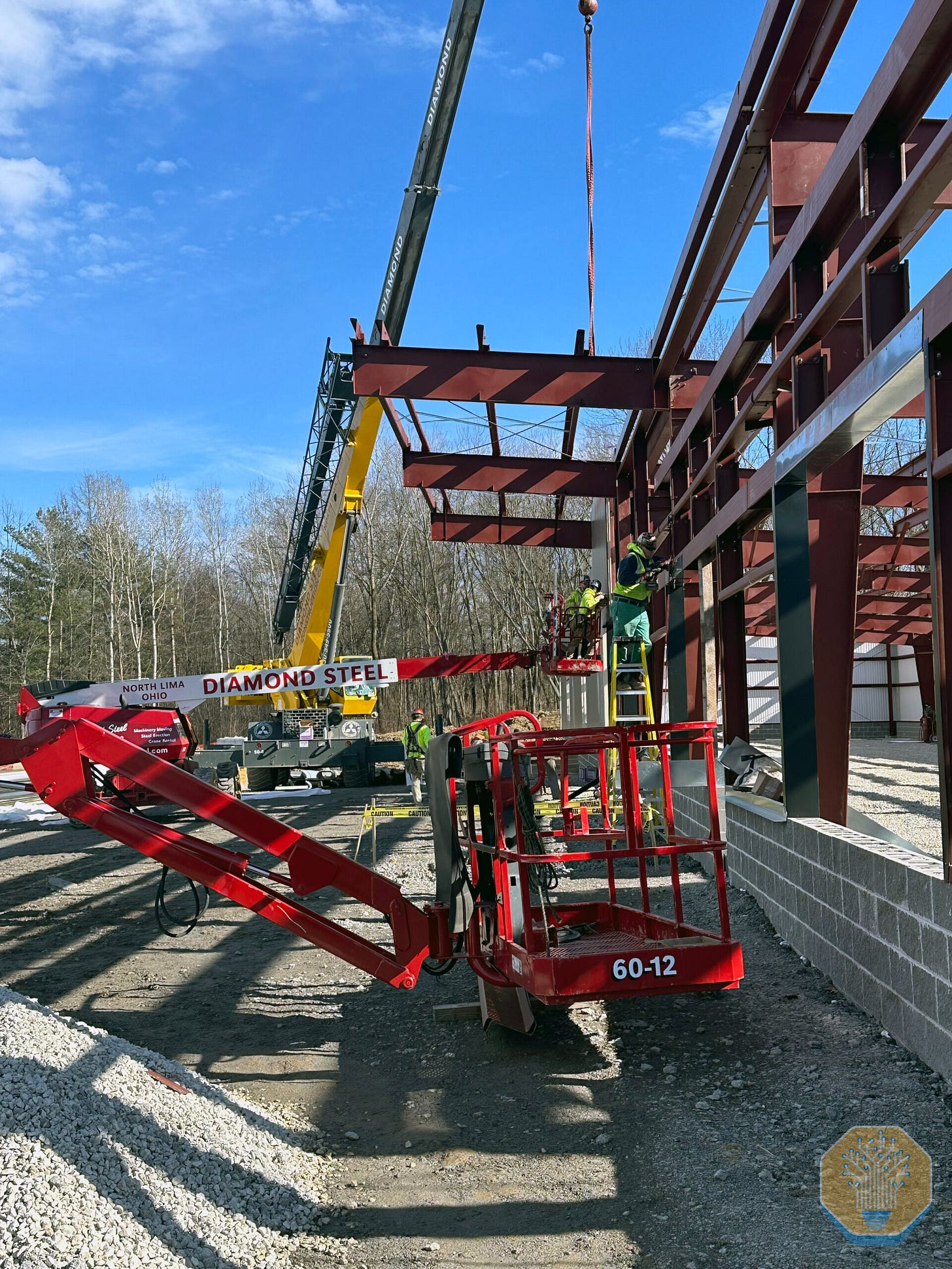
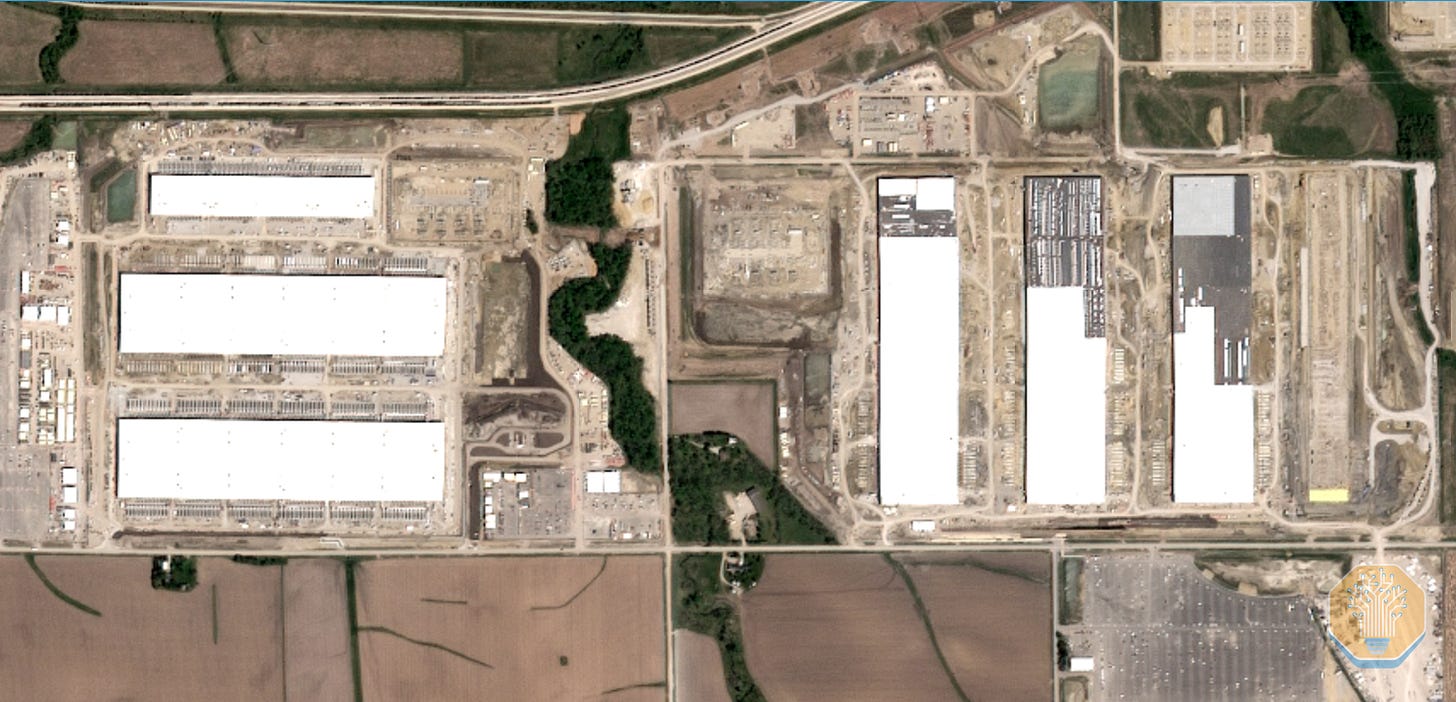
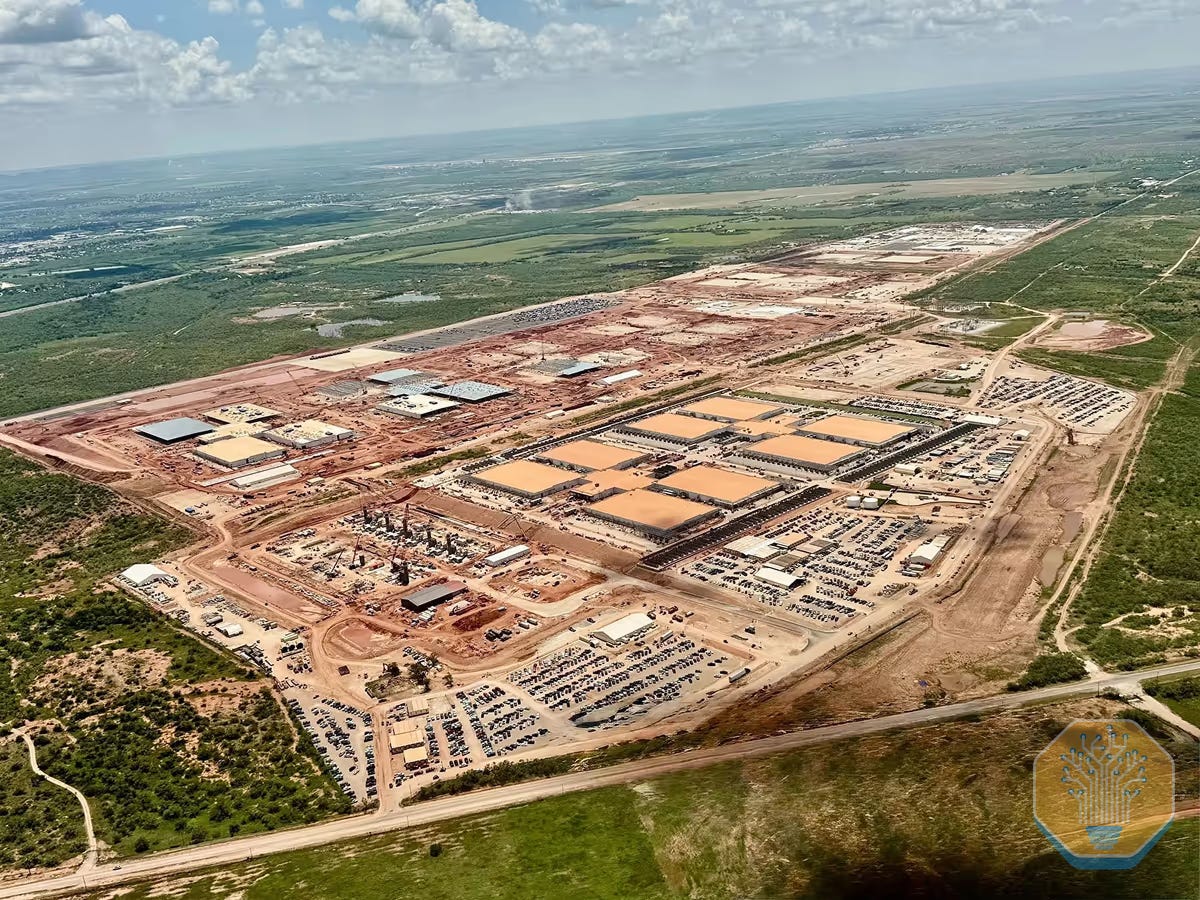
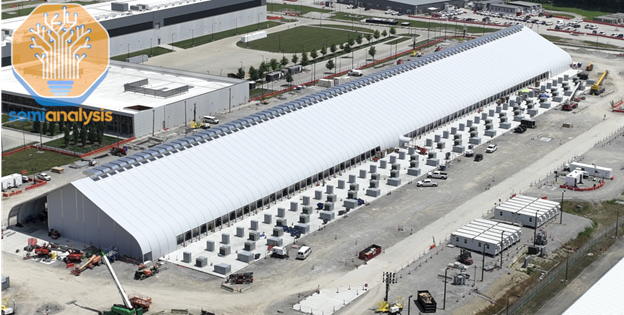
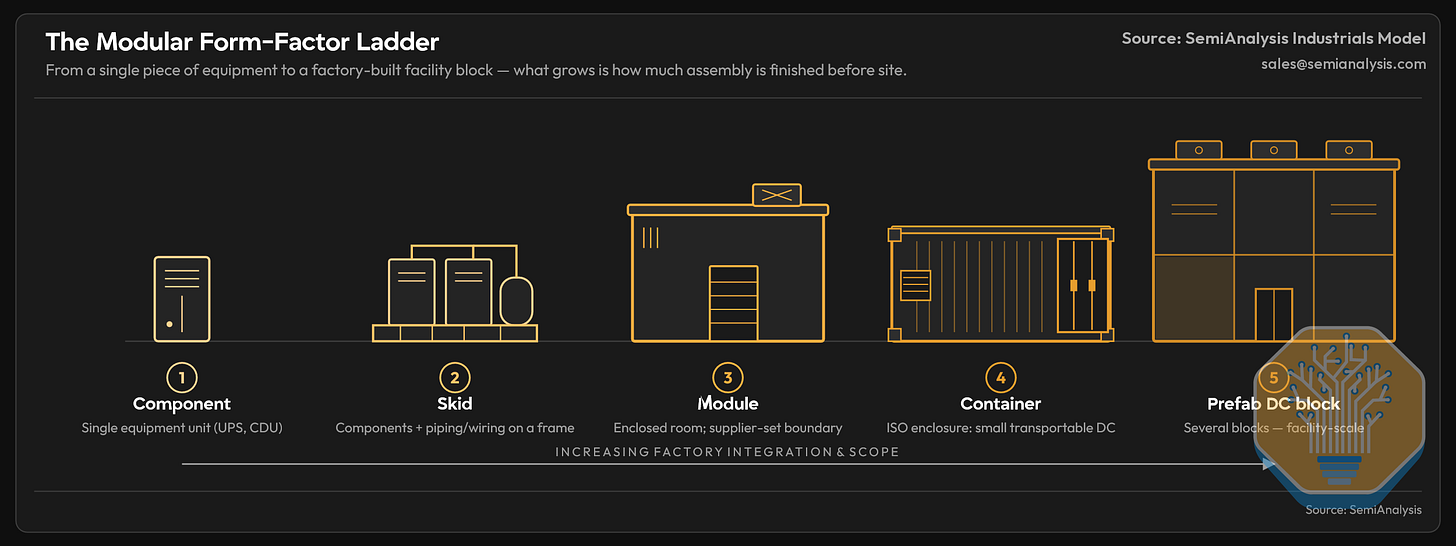
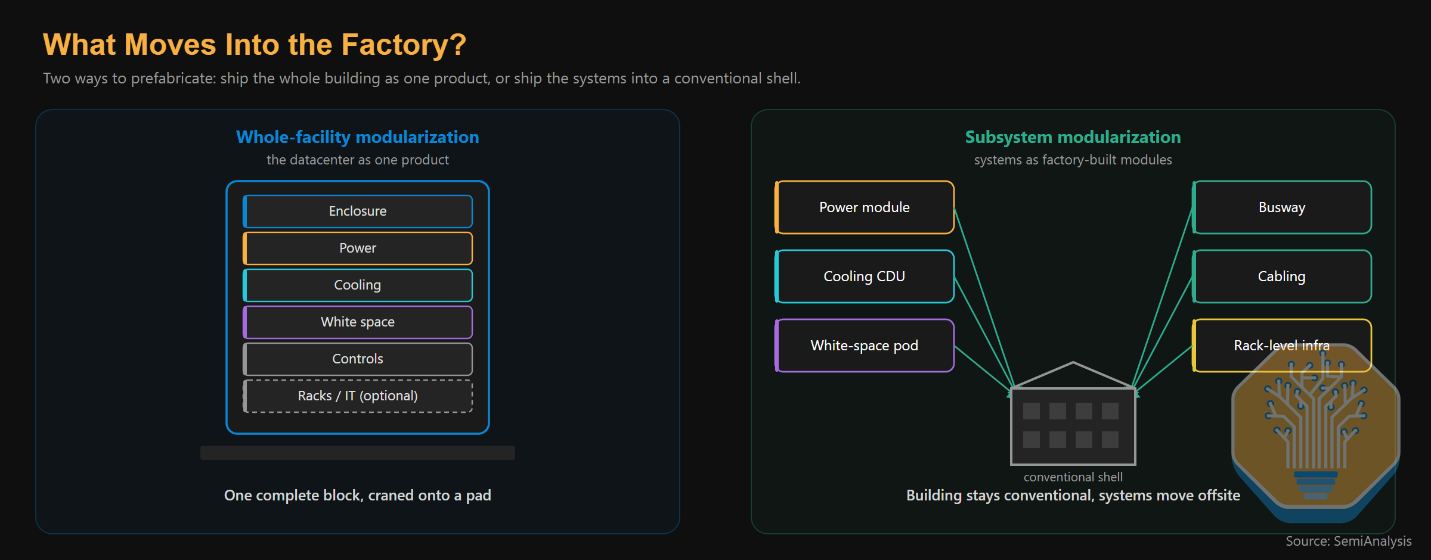
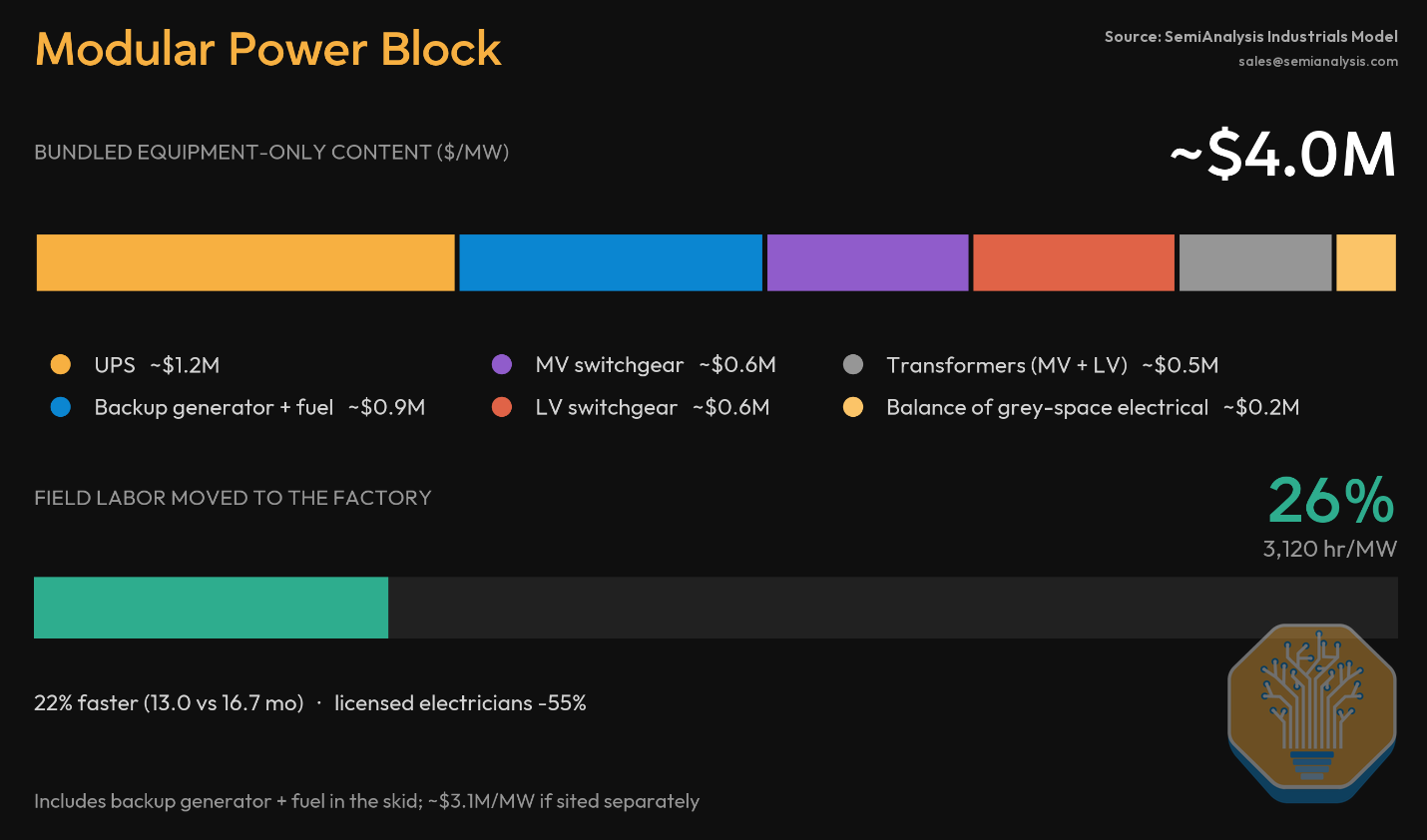
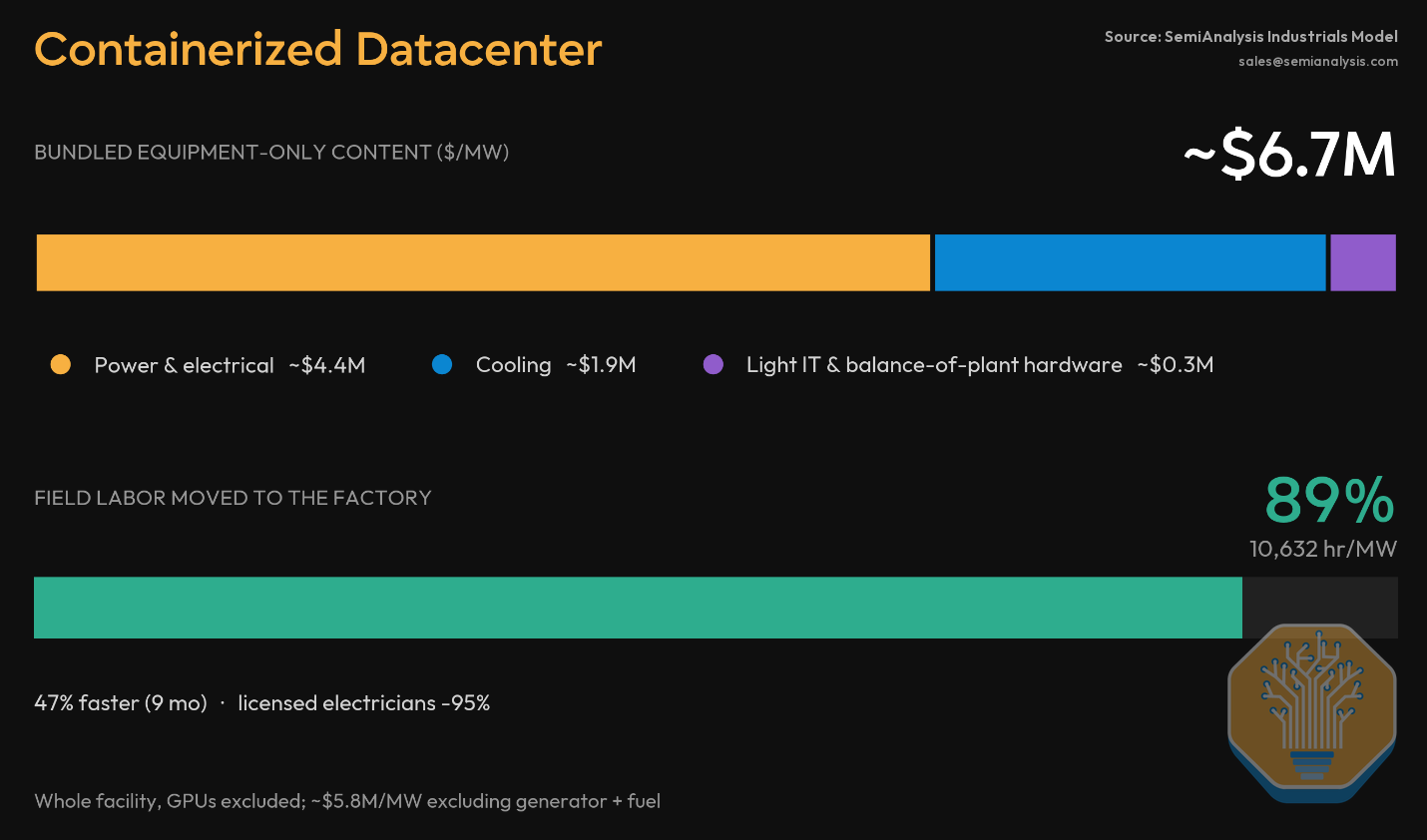
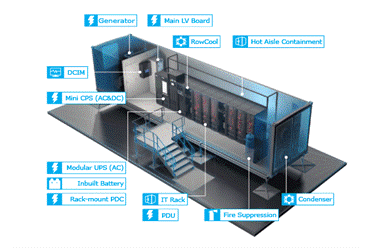
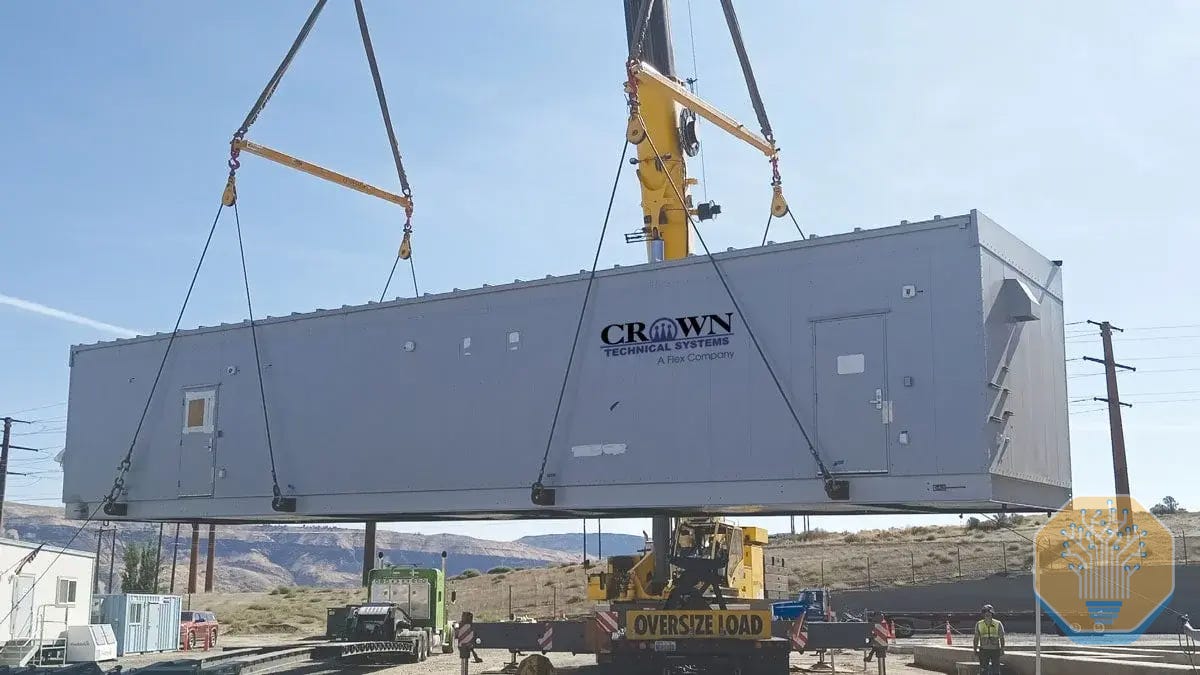
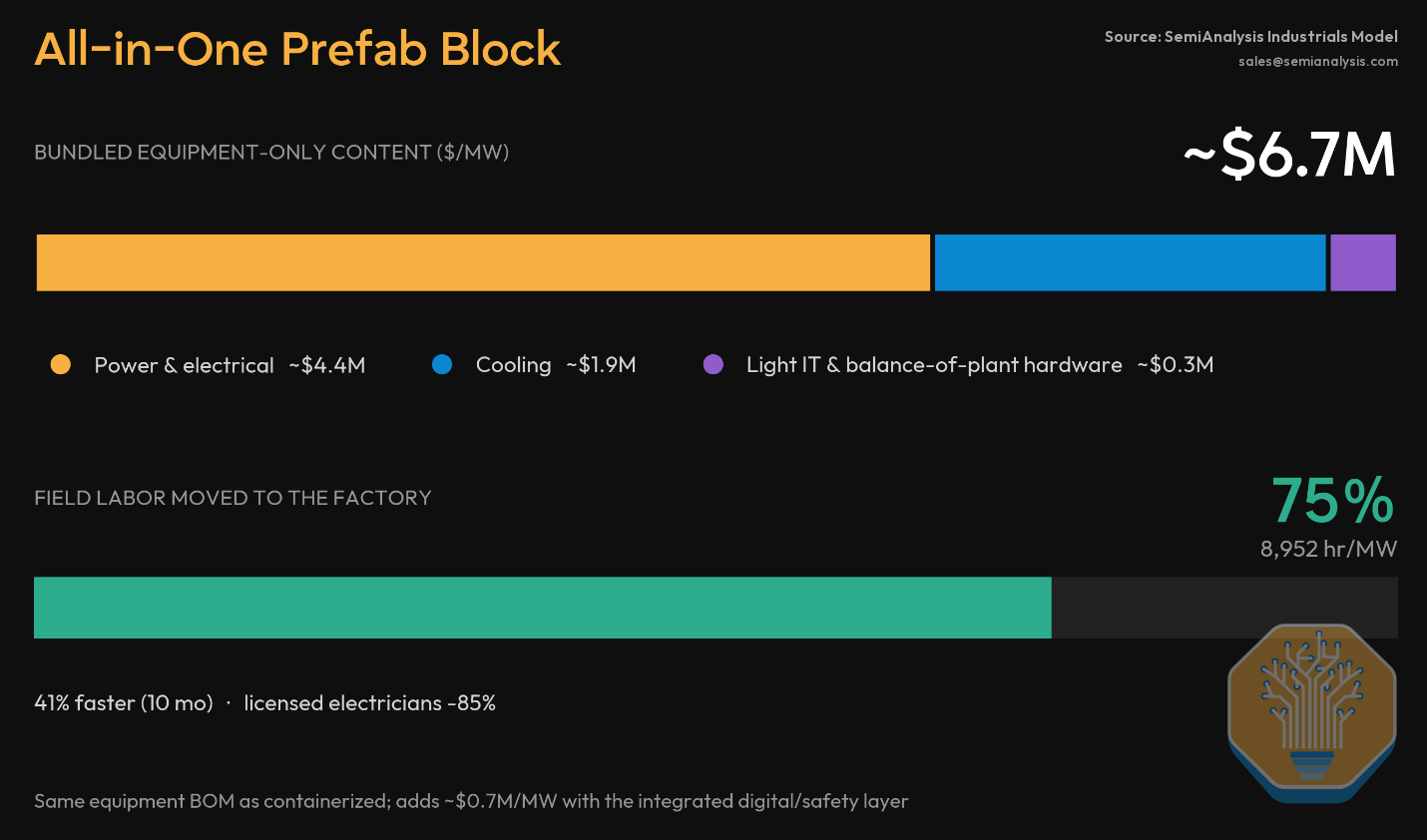
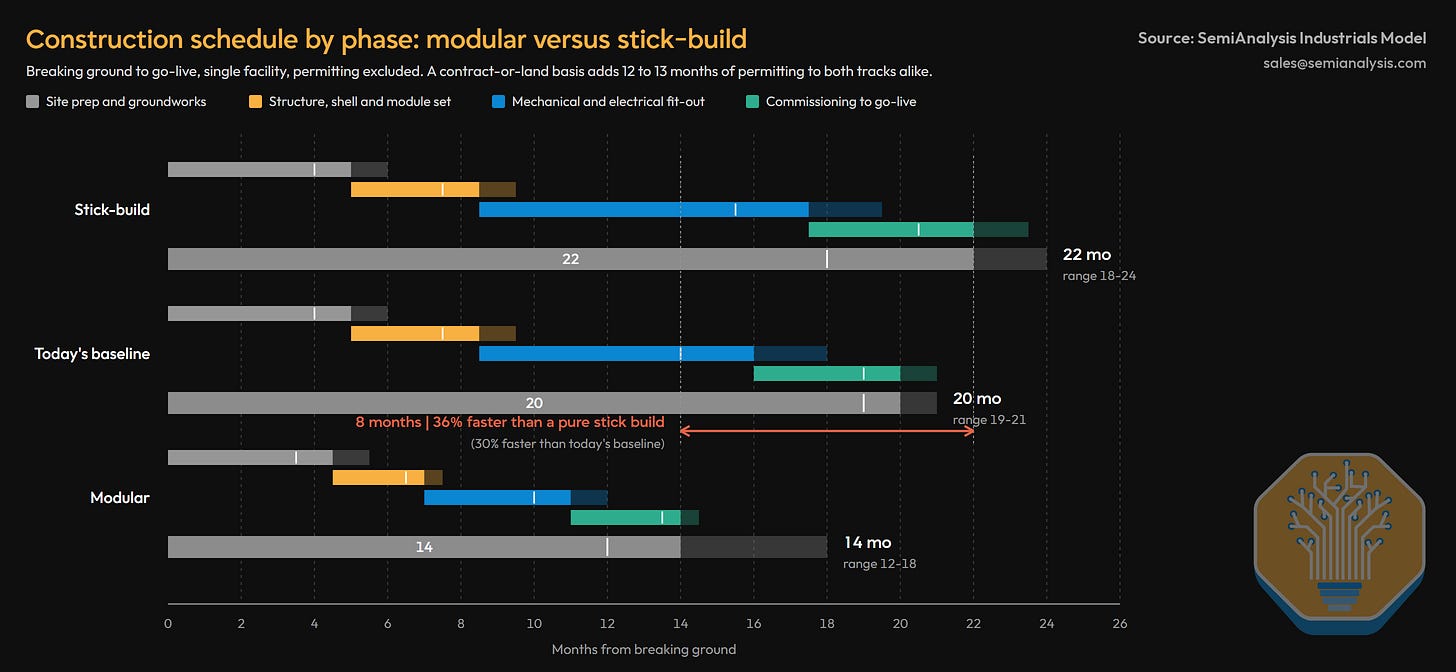
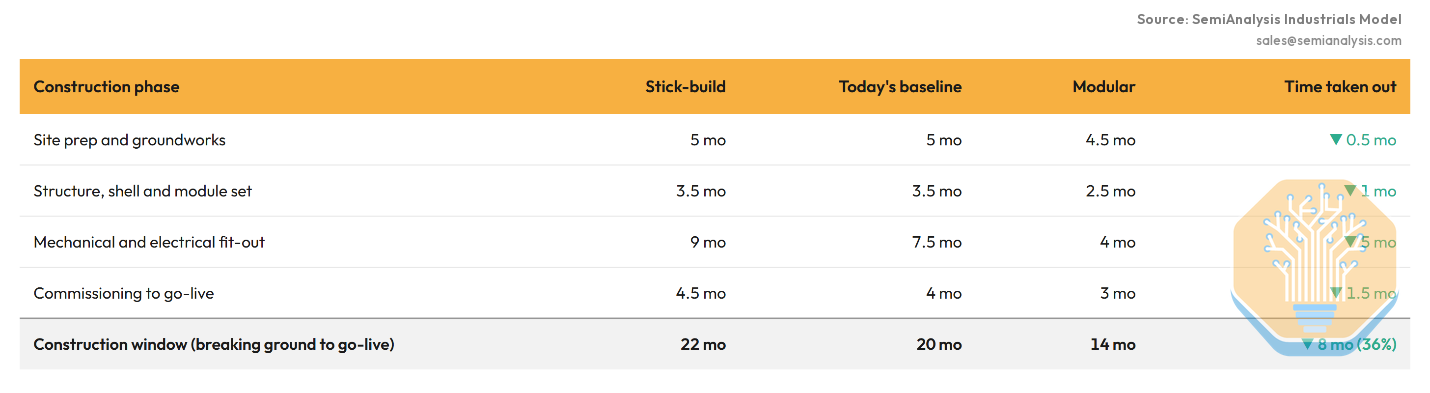
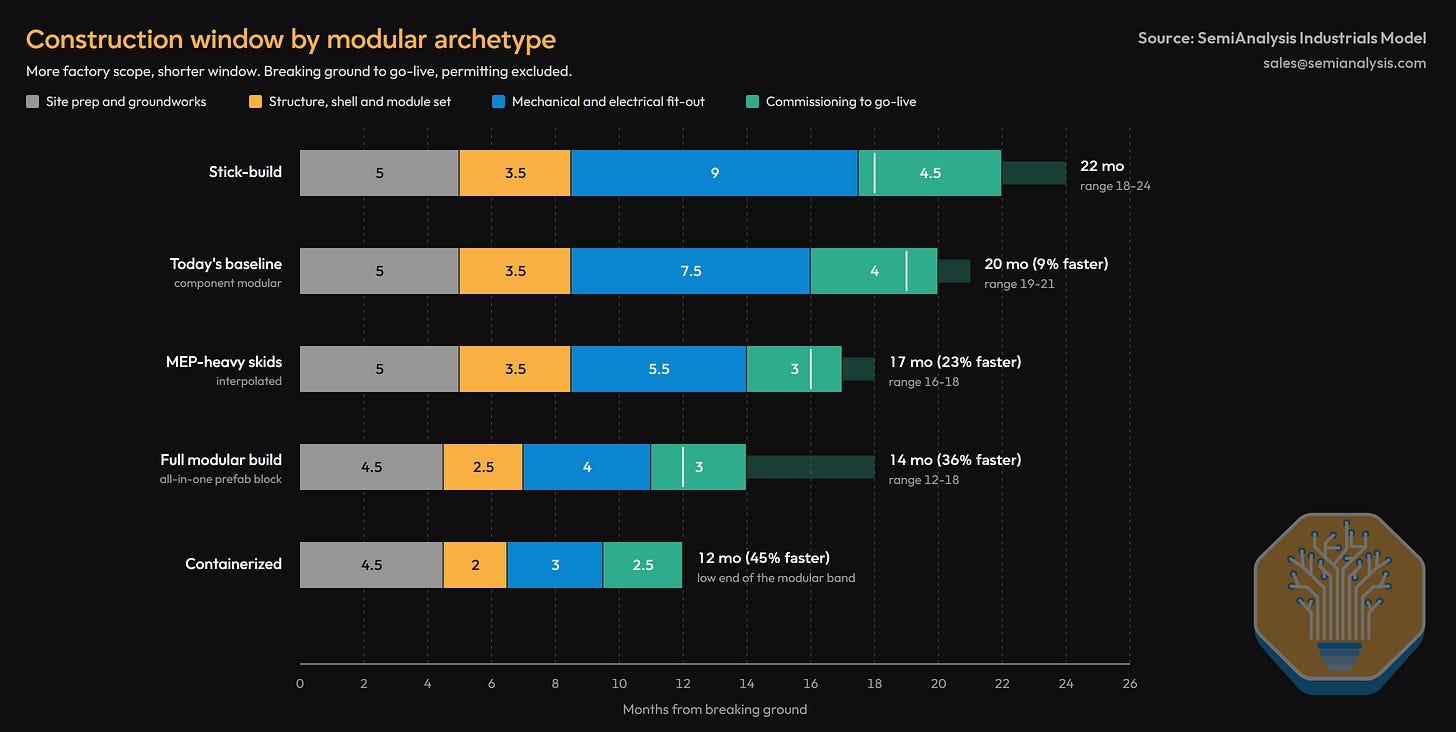
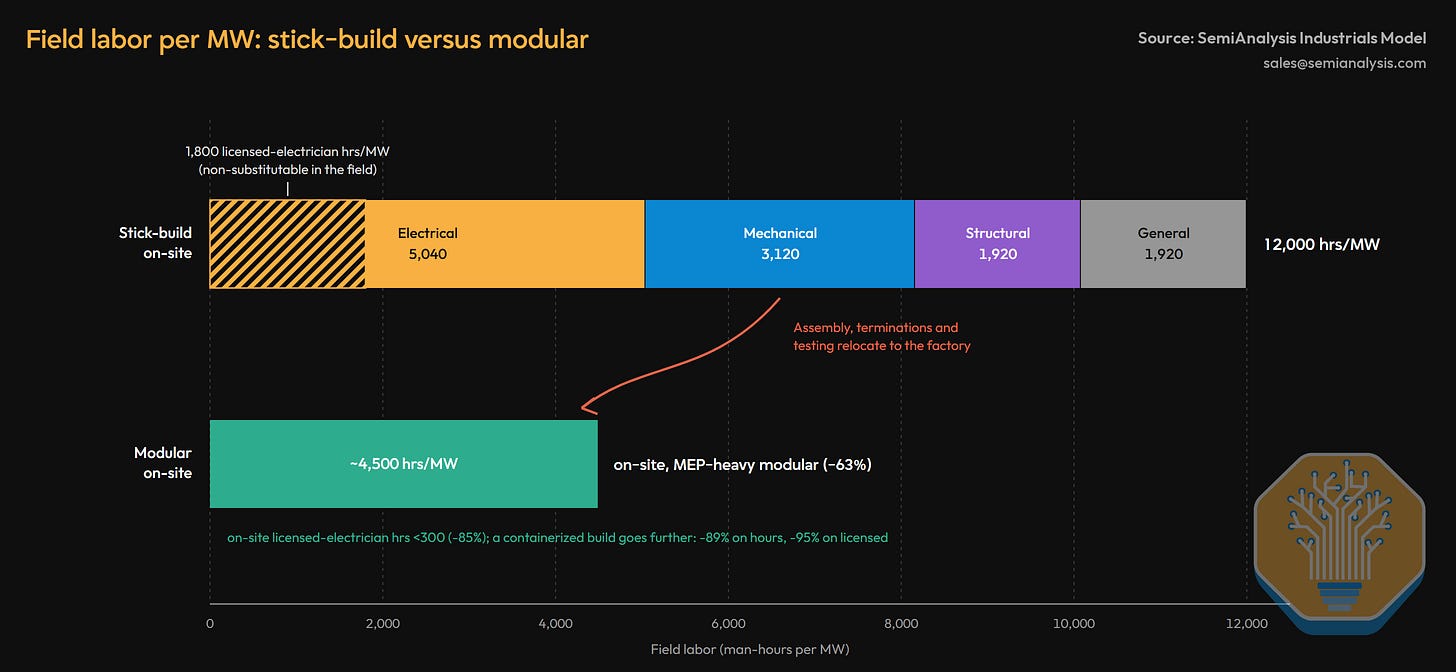
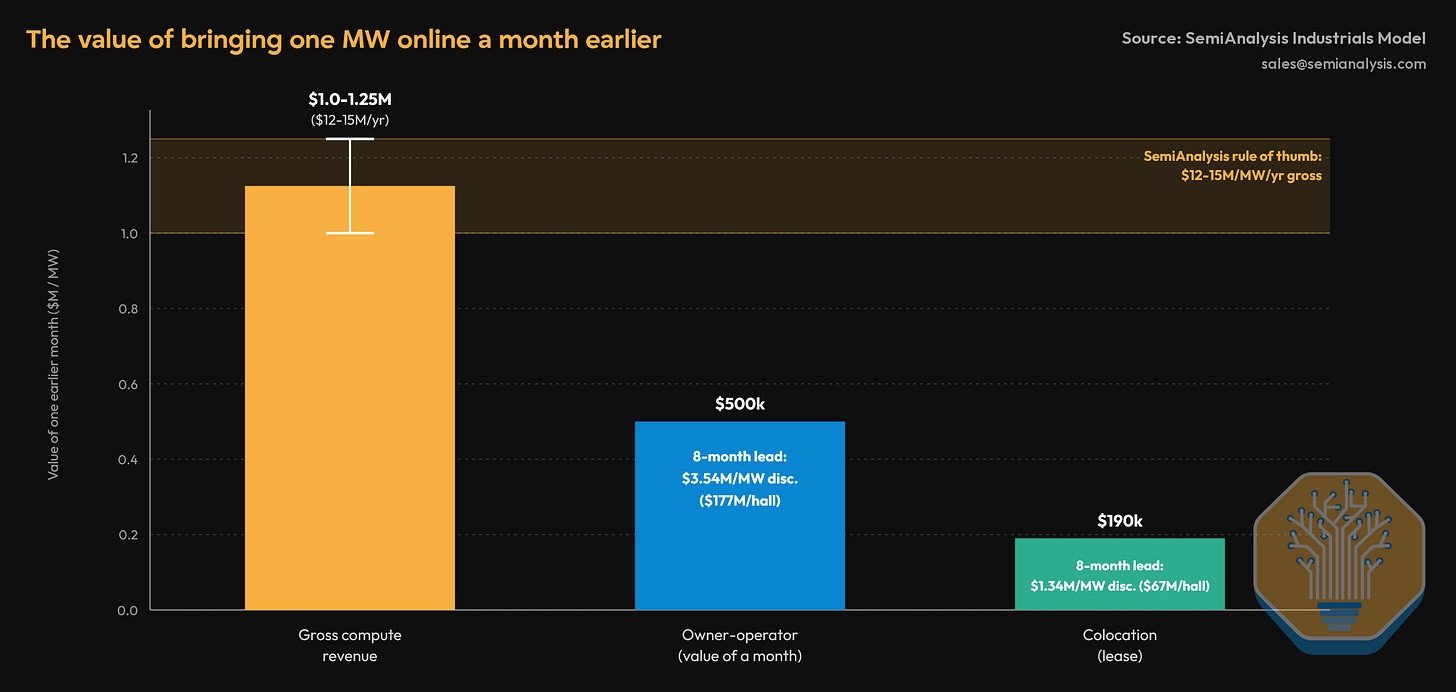
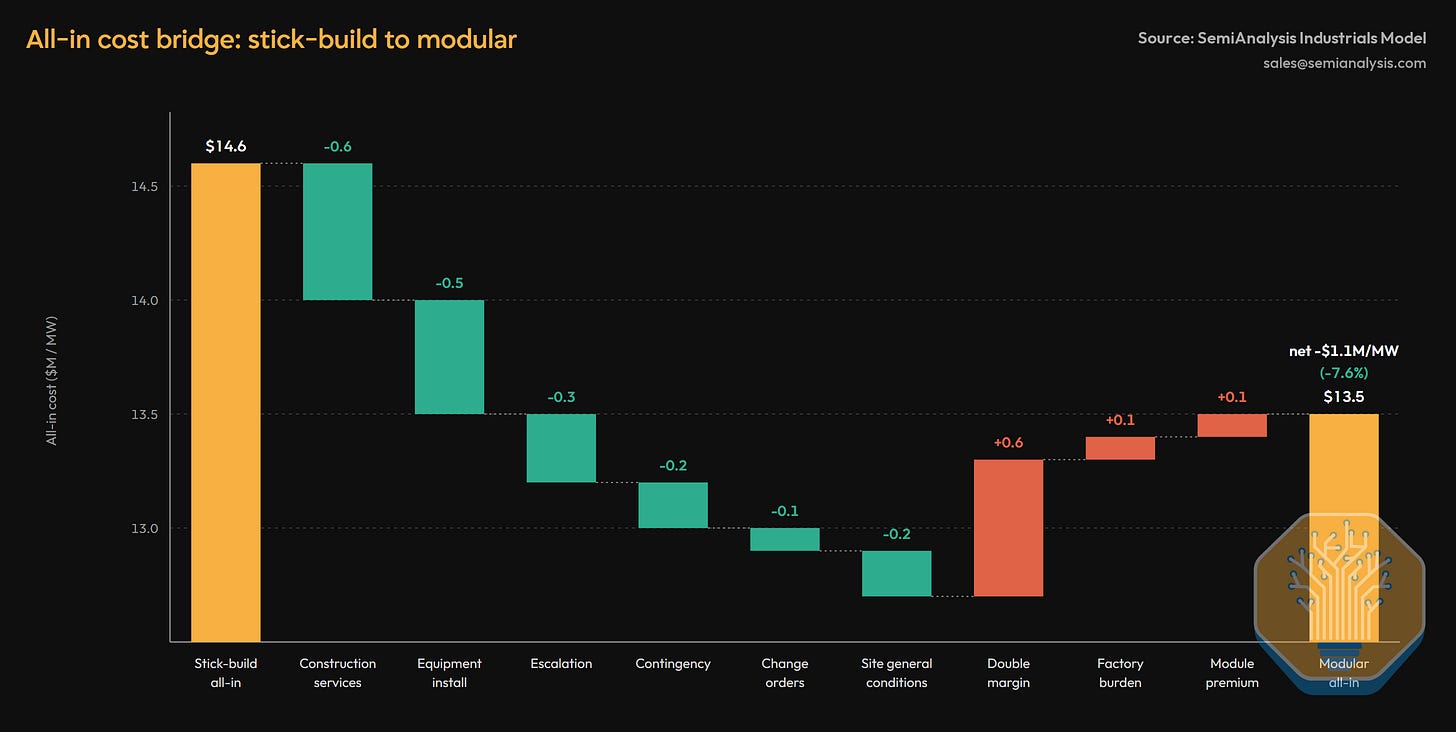
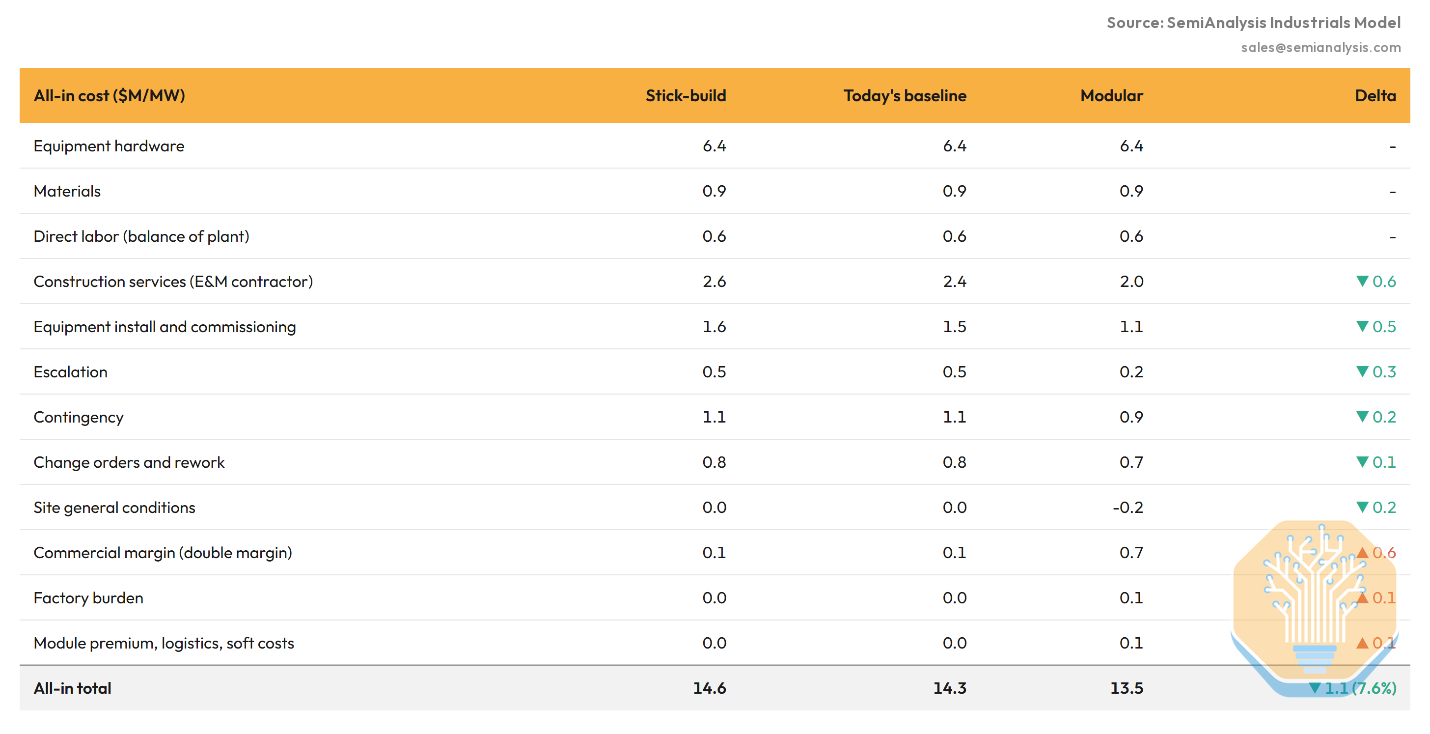
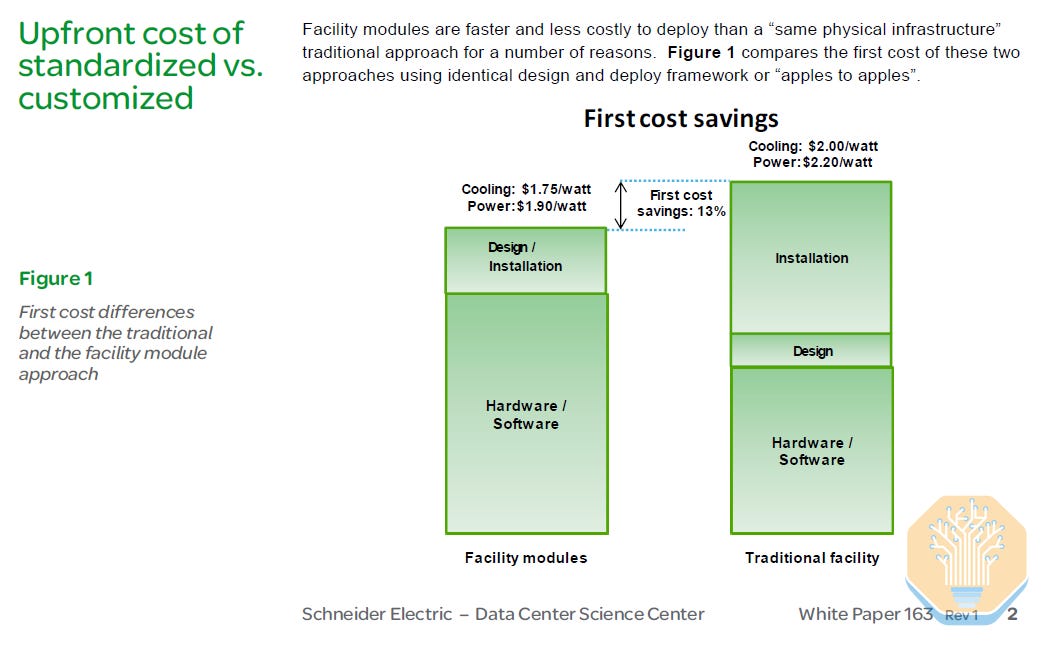
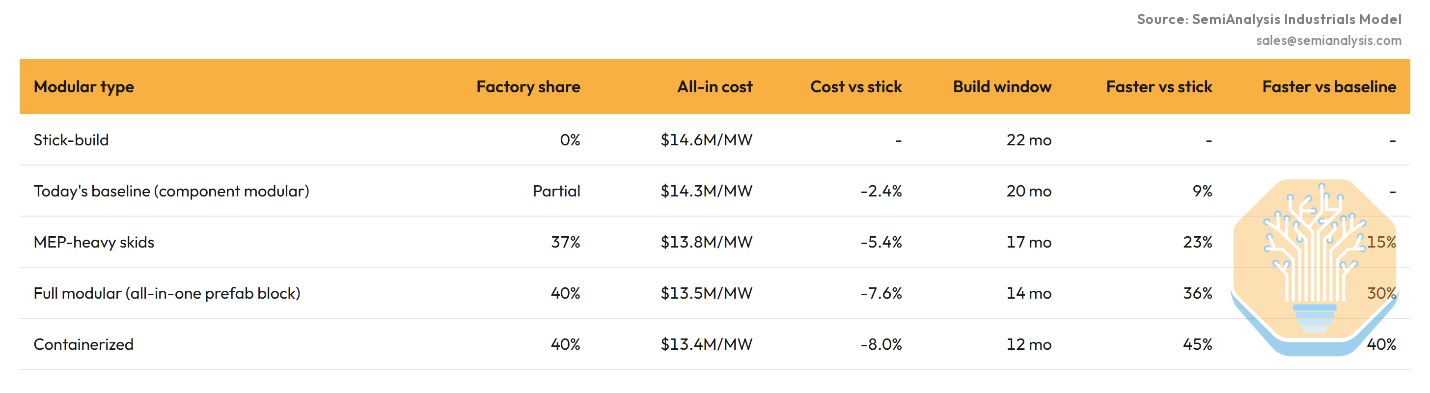
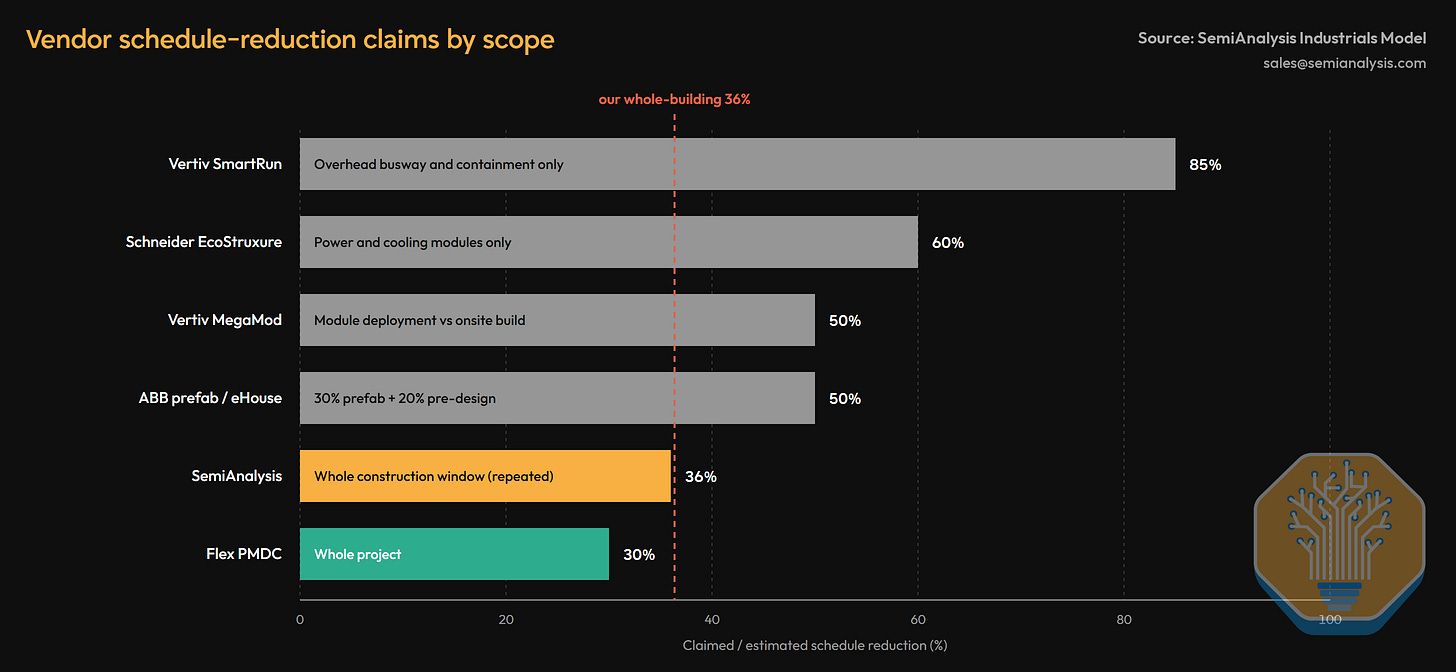
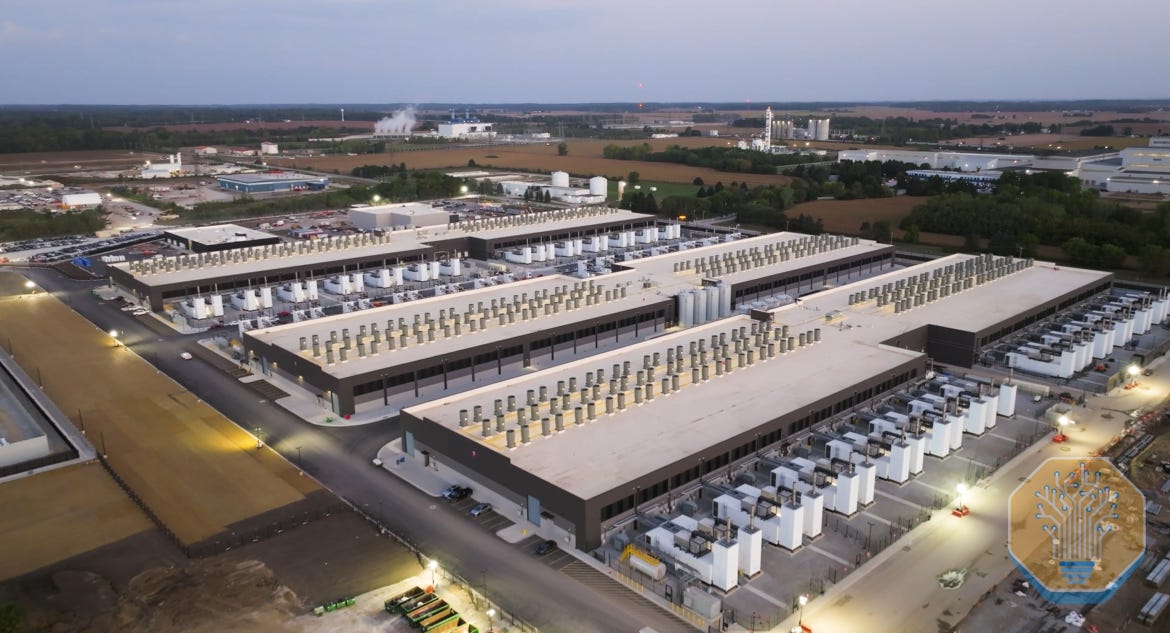
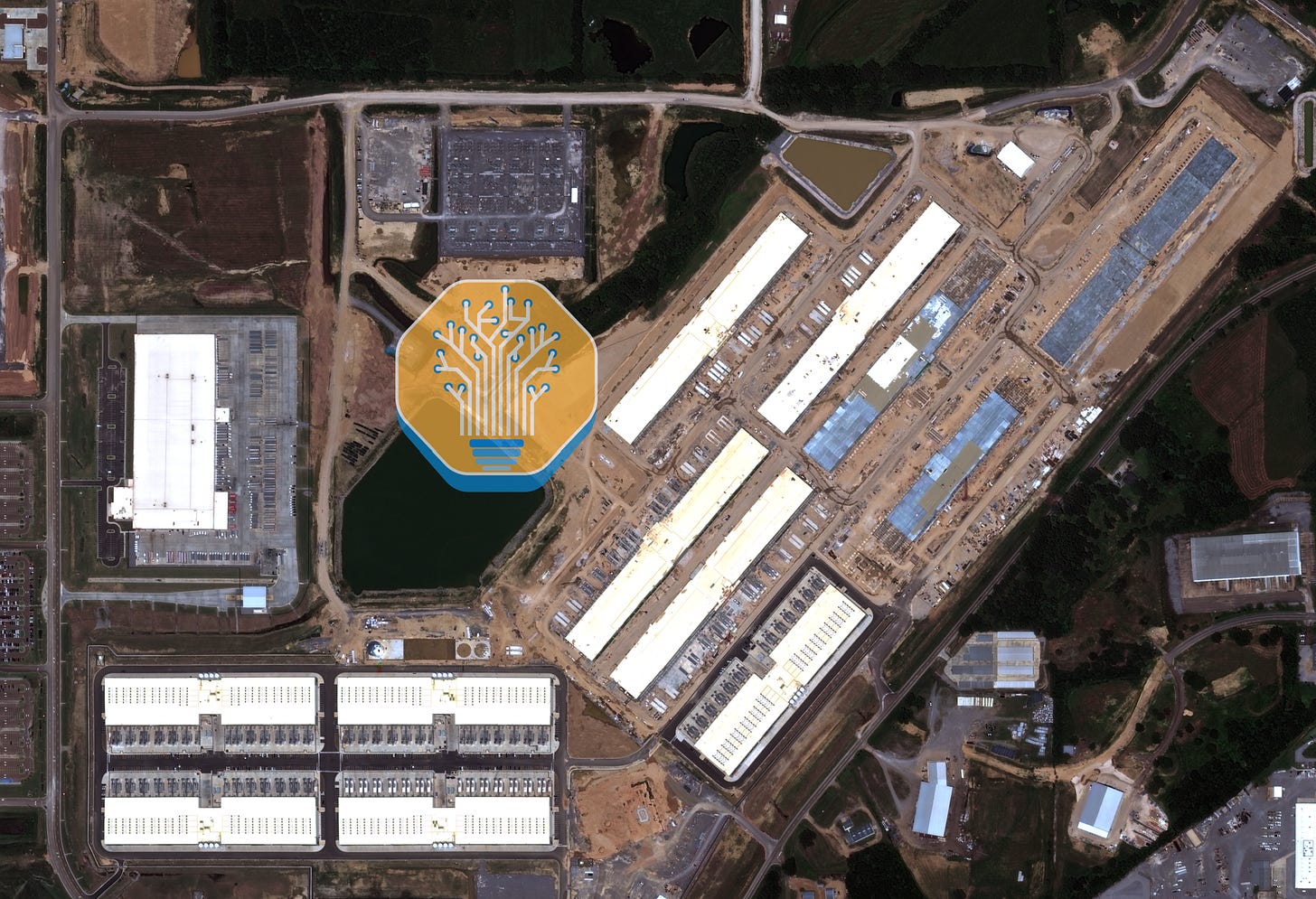
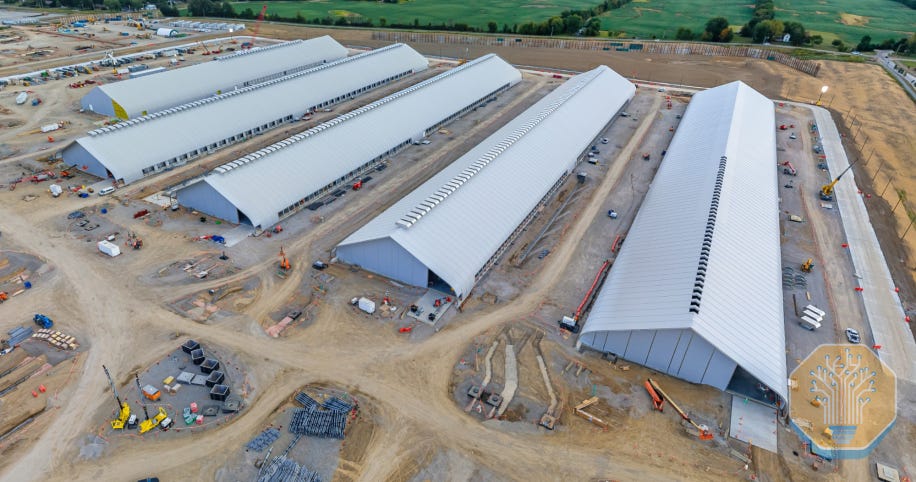
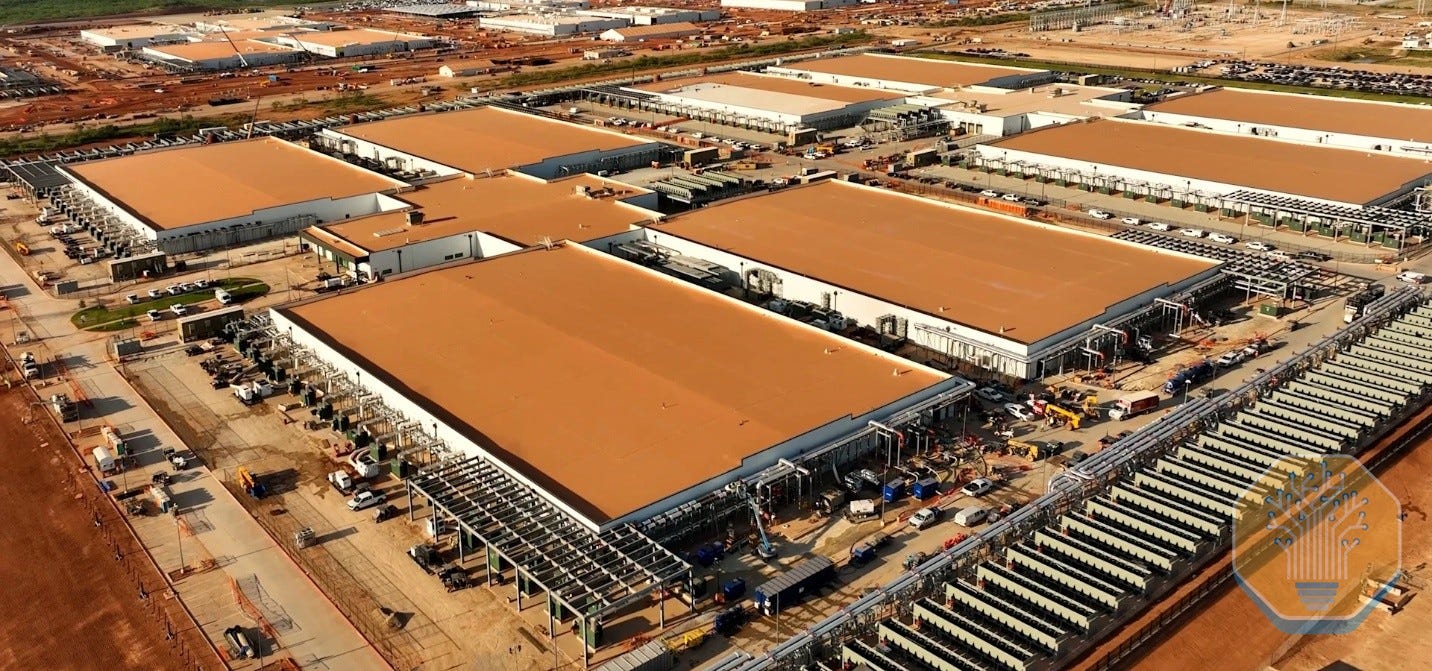
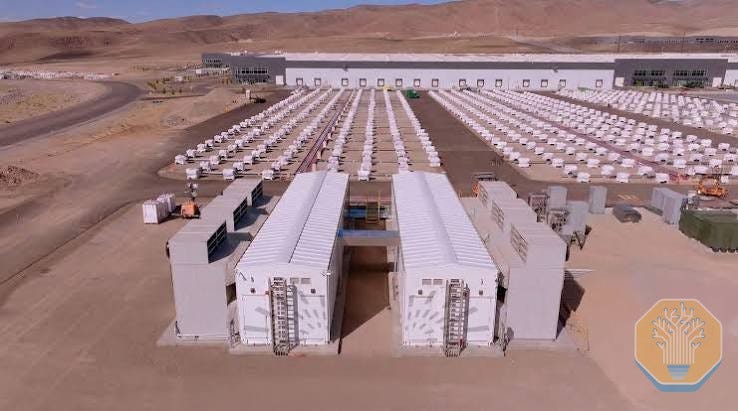
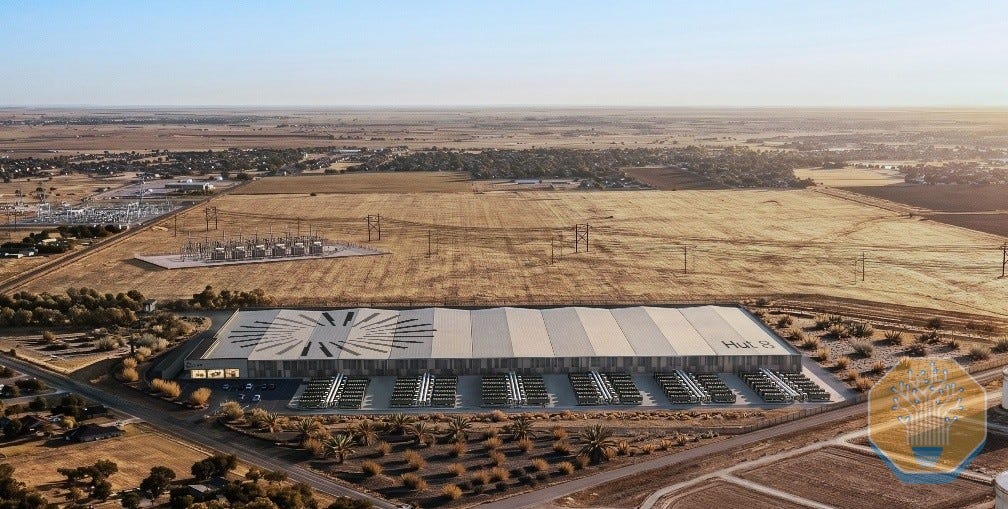
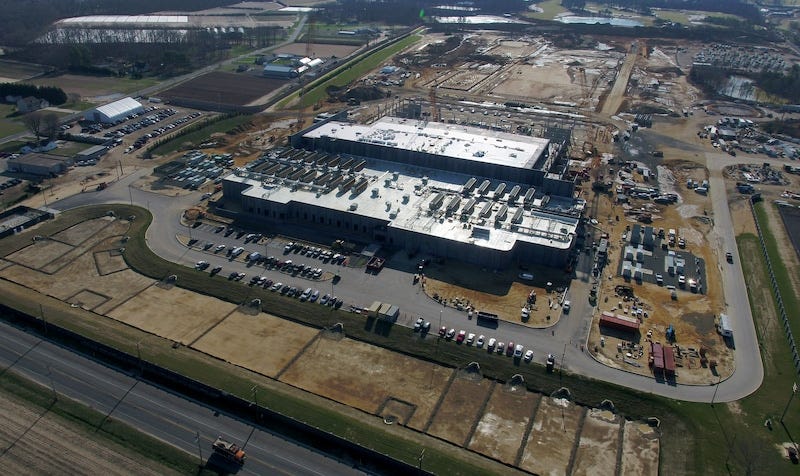
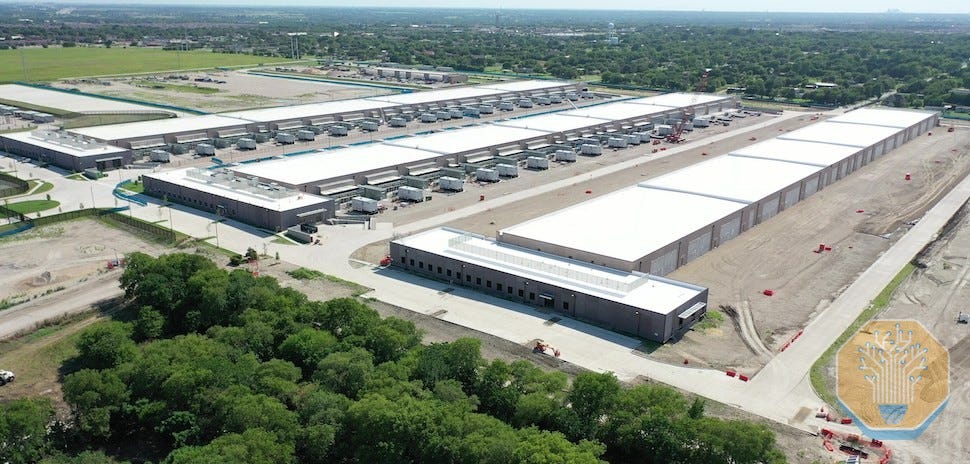
从 Hyperscaler 到 Colos,再到如今的 AI 实验室,模块化施工已成为快速建设的标准打法。包含在 SemiAnalysis Industrials Model 中的 Modular Tracker 追踪了超过 61GW 的模块化产能,以及 1,000 多个采用某种形式模块化或预制策略的站点。Industrials Model 中包含了按模块类别和设备类型的完整细分。我们预计,到 2028 年底,模块化渗透率将达到总投产产能的 30% 以上。
Source: SemiAnalysis Industrials Model
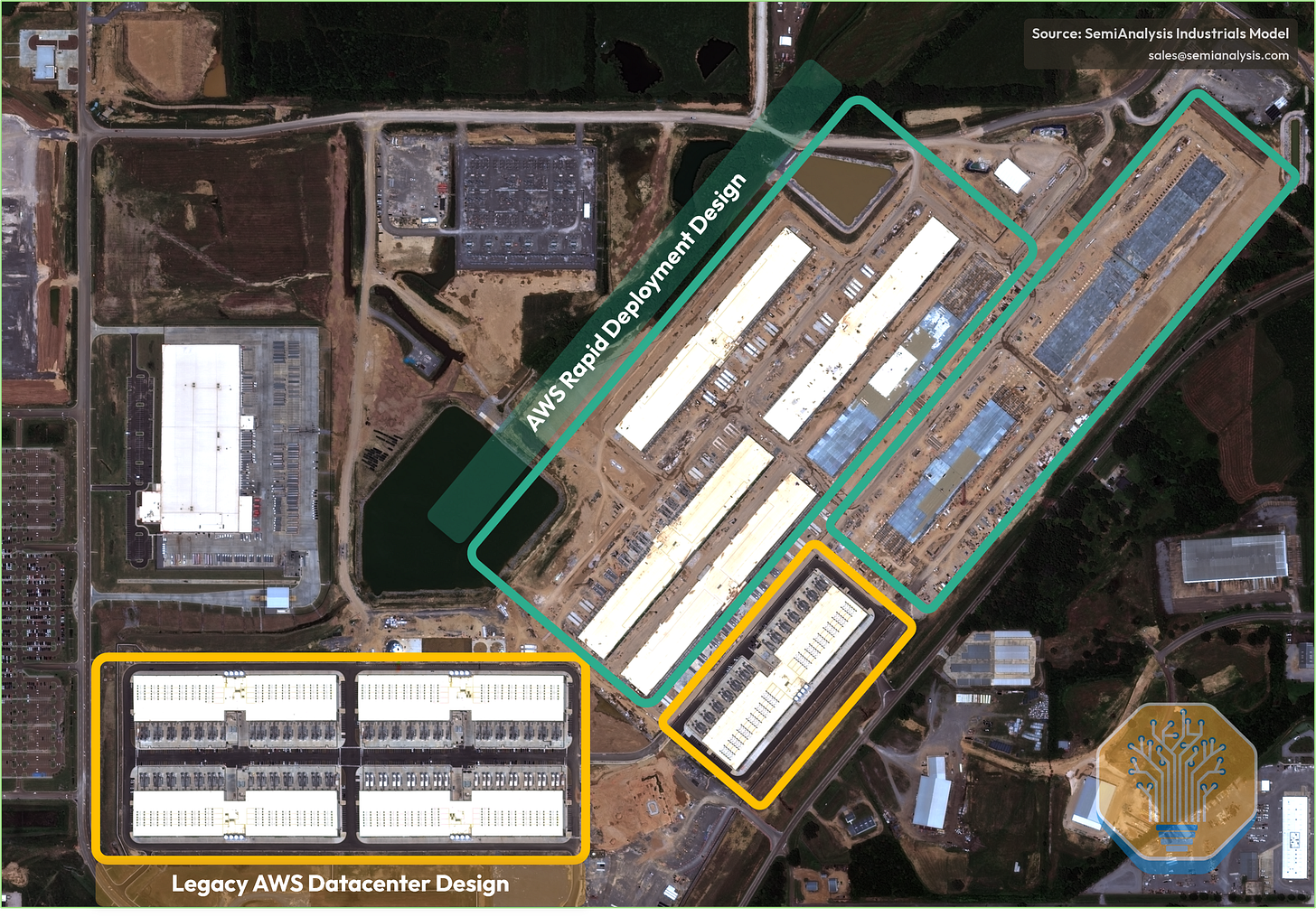
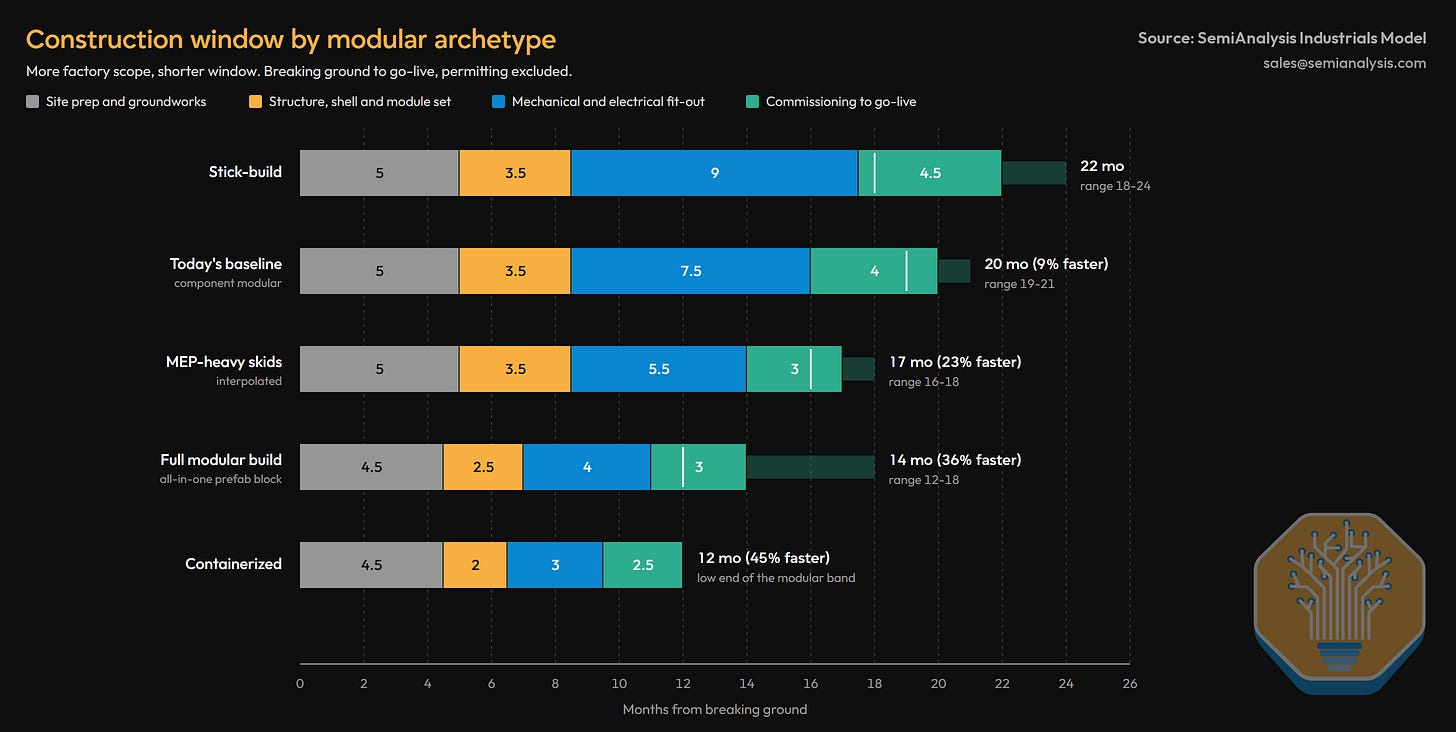
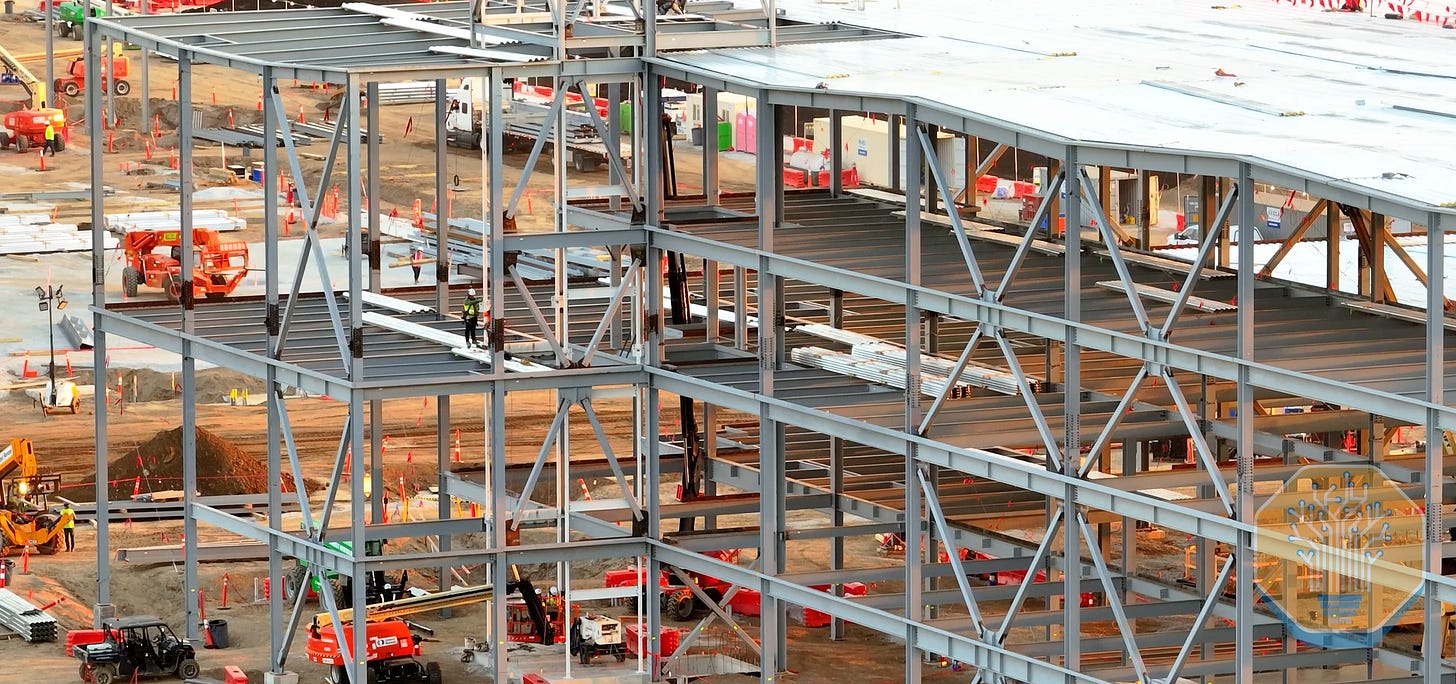
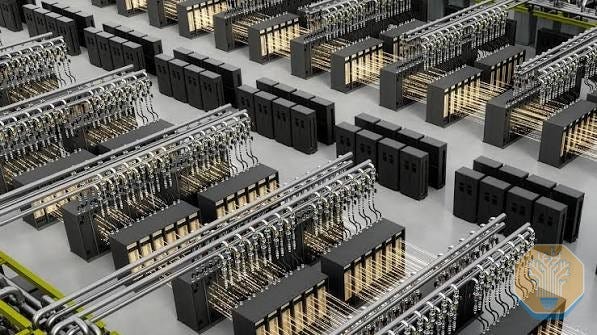
超快速的模块化设计正日益成为常态。一年多前,我们率先指出 Meta 大幅转向使用“帐篷”式建筑。如下图所示,AWS 目前正在大规模推广其代号为“SAMDC”的模块化设计。
Source: SemiAnalysis Industrials Model
为了理解其中的原因,我们需要审视一个仅靠资本激励无法逾越的结构性瓶颈:劳动力。
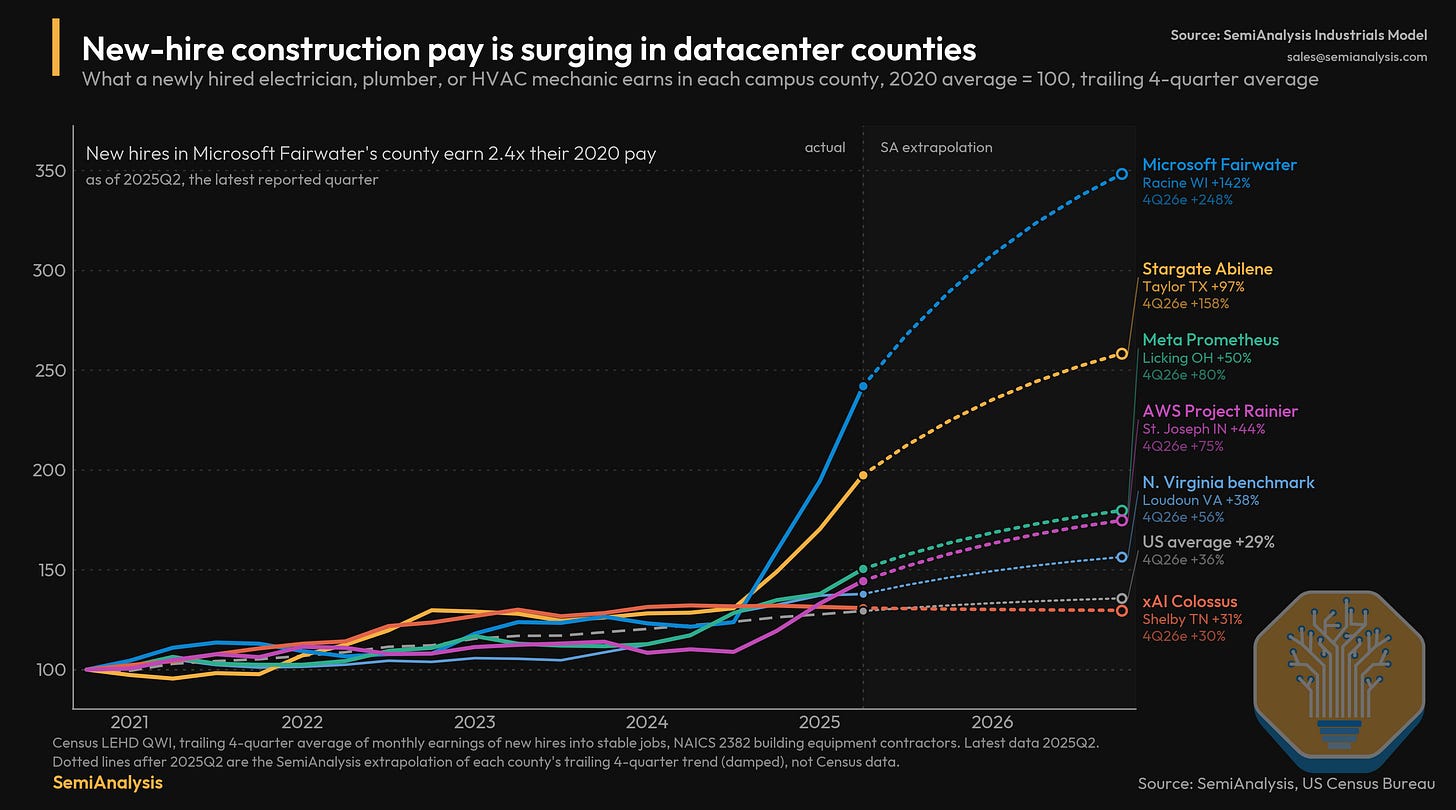
我们近期的文章一直在向这个瓶颈溯源。在《The Case for Space Datacenters》一文中,我们展示了陆地产能的天花板。上个月,在《Stop Saying Half of 2026 US Datacenter Capacity Is Canceled》一文中,我们指出大多数瓶颈都被误解了,且是可以解决的。但技术工人的劳动力短缺是个例外,因为你无法迅速解决电工和管工的短缺问题。对这类人才的争夺早已成为真正的制约因素。当 Crusoe 等运营商将工资提高 30% 以吸引人才前往 Abilene 工地时,这一现象便凸显出来。该工地在高峰期需要超过 9,000 名工人。
Source: SemiAnalysis Industrials Model , US Census Bureau
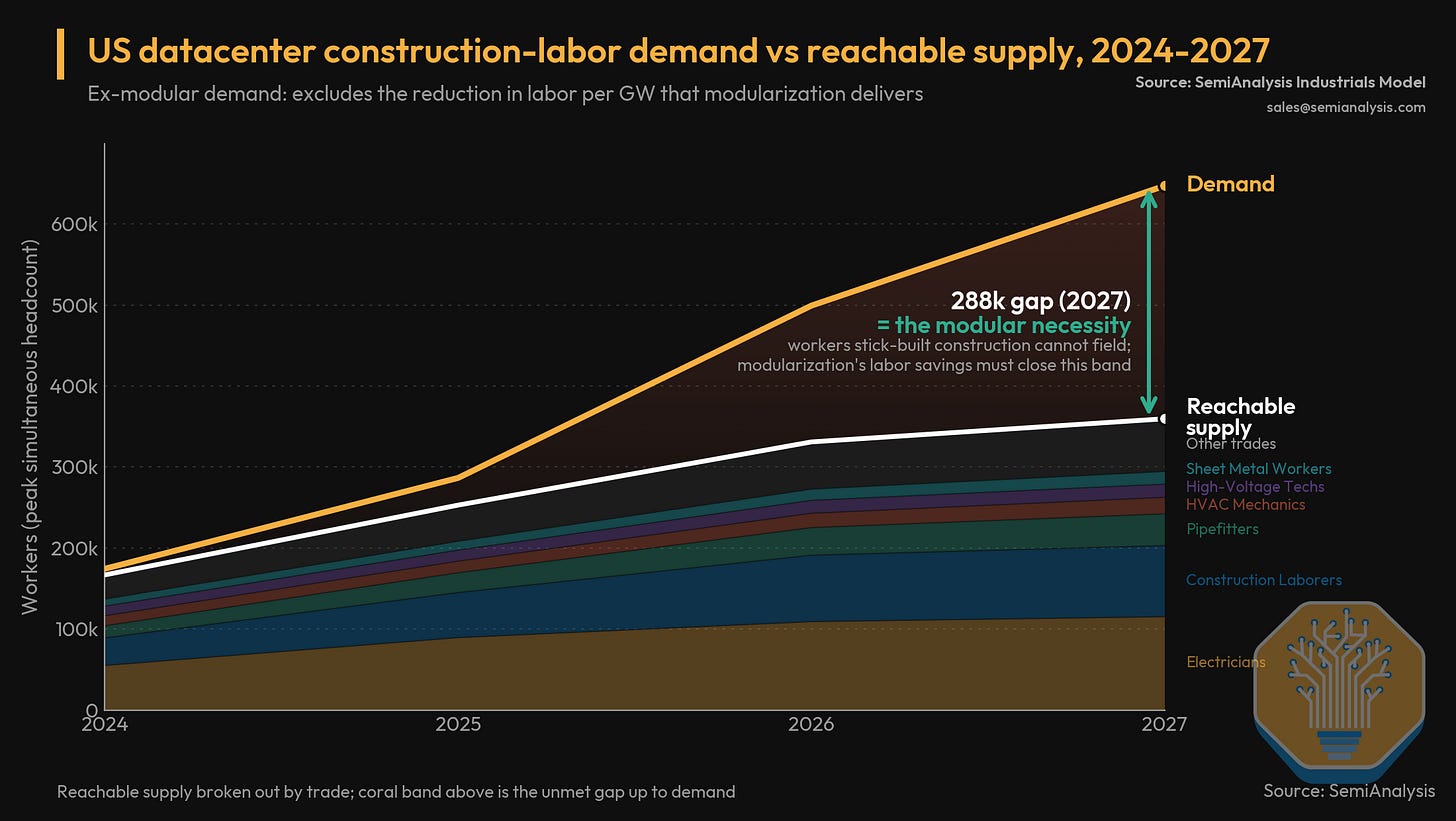
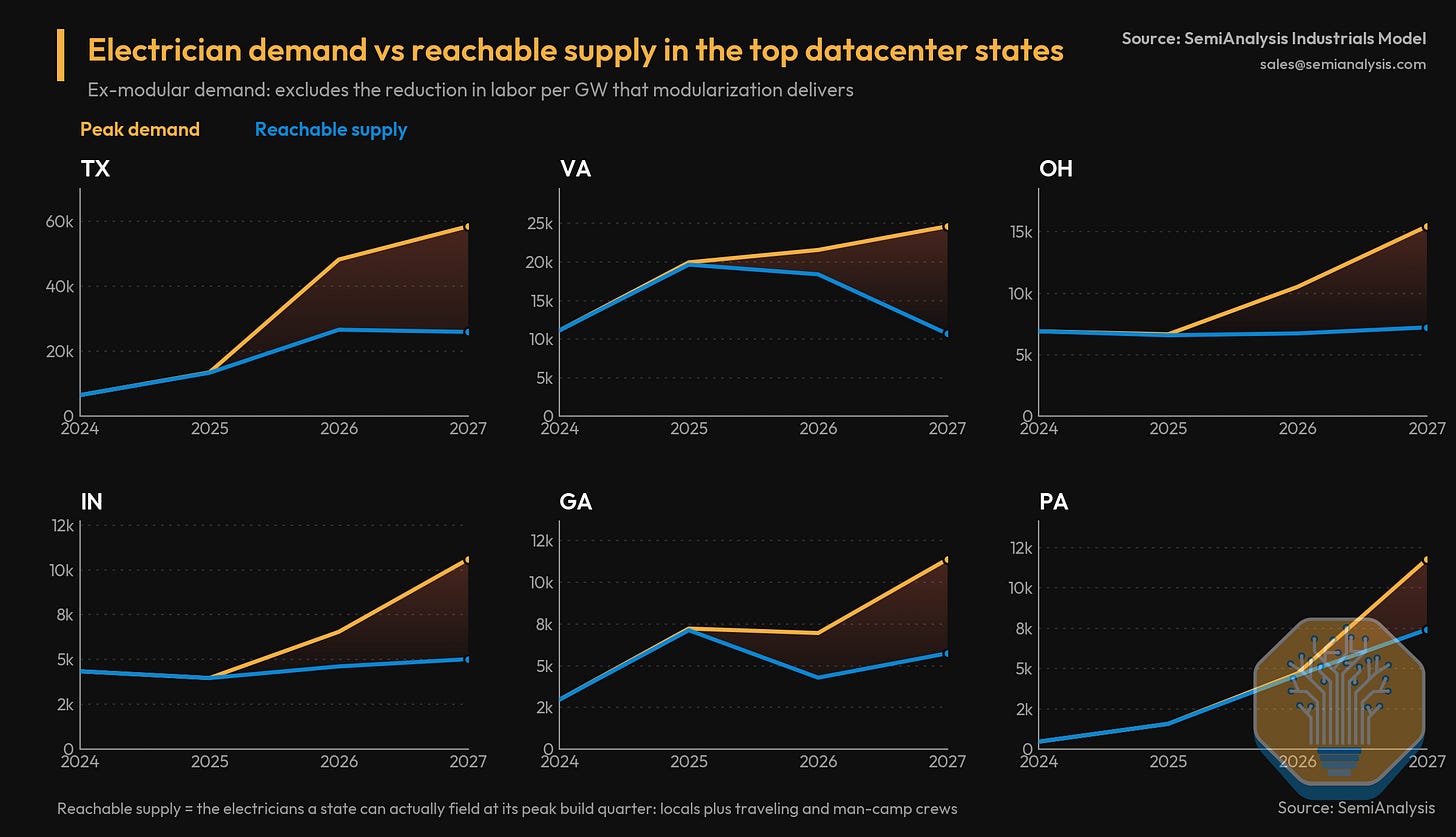
为了按工种量化劳动力短缺问题,我们现在将 Labor Model 也纳入了 Industrials Model 的一部分。它将 Datacenter Model 中各州的建设情况,转化为各工种的工时需求,并与可及的劳动力供给进行对比。为了在引入模块化之前界定这个问题,下图排除了模块化施工的影响。其中的劳动力需求曲线假设,每 GW 所需劳动力在预测期内大致保持平稳,尚未反映本文稍后将介绍的模块化带来的益处。另一方面,各州可及的劳动力供给则受到正在建设的产能规模,以及其他美国州吸引多少劳动力的影响。
面向订阅用户,我们将重点关注主要受益者,并剖析各家企业的定位。无论是上市企业(如 FIX、STRL、PWR、VRT、SU、FLEX 等),还是 Infra Partners、Bladeroom 和 Faith Technologies 等私营挑战者,我们都将进行分析。此外,我们还提炼了近期 Core Research 订阅简报中的核心洞见,涉及 Comfort Systems:《Modular Capex Is The Moat》,以及 Sterling Infrastructure:《Winning Where It Counts: Quadrupled TAM via Texas, Pacific Northwest, and the Midwest; 2X Content per MW from CEC Attach; ~$6B Run-Rate In View》。
首先,我们要感谢 QTS、EdgeConneX、Aligned Data Centers、Schneider Electric、Applied Digital、DG Matrix、Aran Industries、Karman Industries、Radiant 和 Rajat Bhagat。在本次深度调研的撰写过程中,他们提供了宝贵的贡献与见解。
在部署 DSX 设施时,借助 Omniverse DSX Blueprint,运营商首先会构建设施的数字孪生,实时模拟布局、电力拓扑、散热特性和运营策略。在建设开始前优化设计,随后在多个站点复用这一经过验证的架构。例如,CoreWeave 已在使用 DSX Air 构建和测试其 AI 工厂的数字孪生。
Besides, the whole DSX ecosystem includes pretty much all the supply chain: Cadence, Dassault Systemes, Eaton, Jacobs, Nscale, Phaidra, Procore, PTC, Schneider Electric, Siemens, Switch, Trane or Vertiv. Vertiv’s OneCore, for example, packages power and cooling into standardized 12.5 MW pods that can be combined into larger AI-factory deployments
EdgeConneX estimates that a common design can advance a project to roughly a 30% to 60% permit set before site-specific localization is complete, allowing substantial off-site work to begin earlier.
Vendor landscape
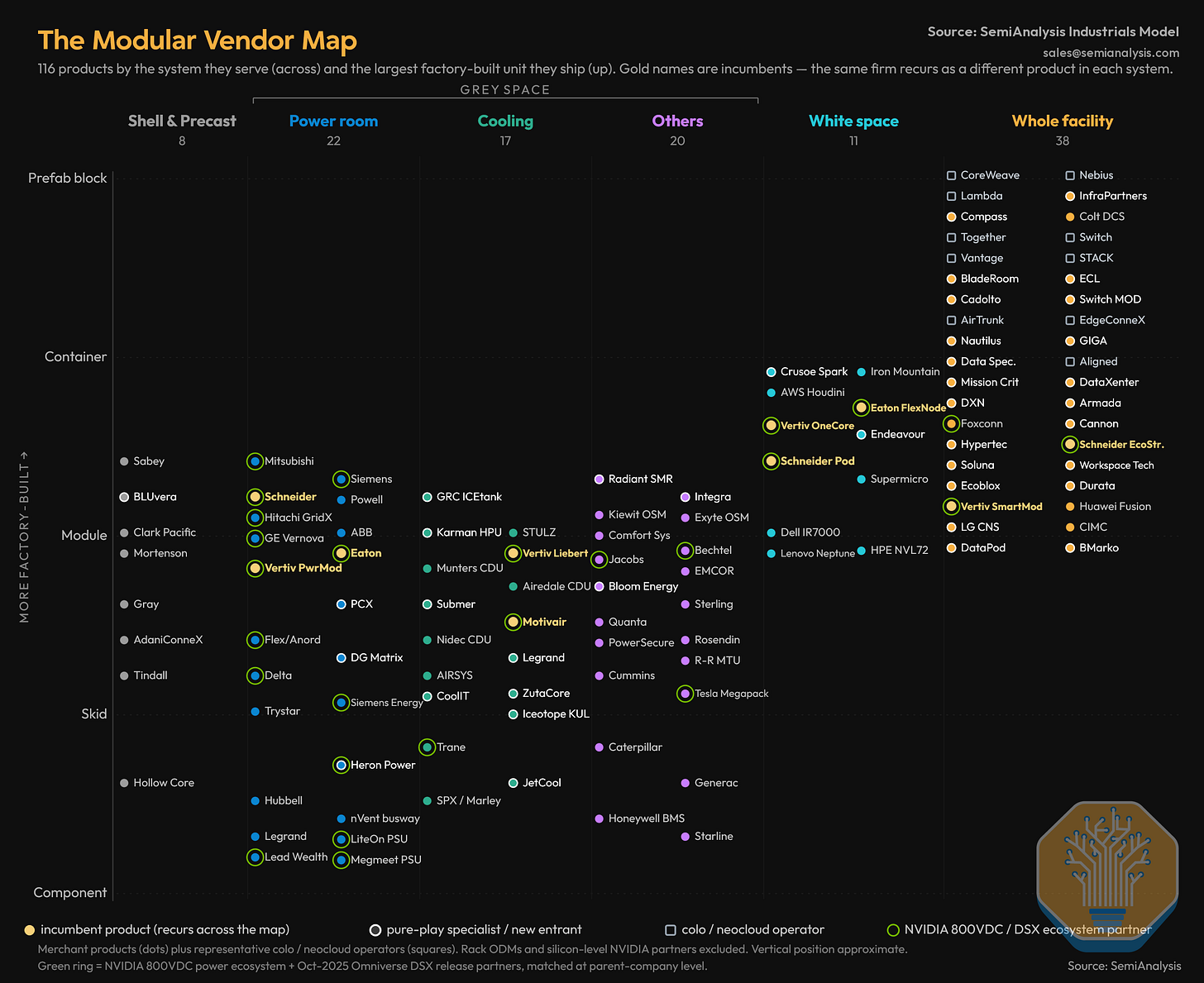
If you have made it this far, you should have a working feel for the categories. You should also, maybe be a little buried in names. We have put a power module from Flex, a CDU from Airedale, a data-hall pod from Schneider, and an all-in-one datacenter from Vertiv all in front of you. So before going further, it helps to step back and lay the whole market out on a single map.
Source: SemiAnalysis Industrials Model
Our universe runs to over 80 players, and laying them out this way is useful because two patterns jump out right away.
The depth is in the subsystems . The power-room and cooling modular are by far the most crowded
The same names keep showing up across columns, because a vendor like Vertiv, Schneider, or Eaton sells a power module, a CDU, a white-space pod, and a whole block all at once.
Owning the Integration: Who actually does the modularization?
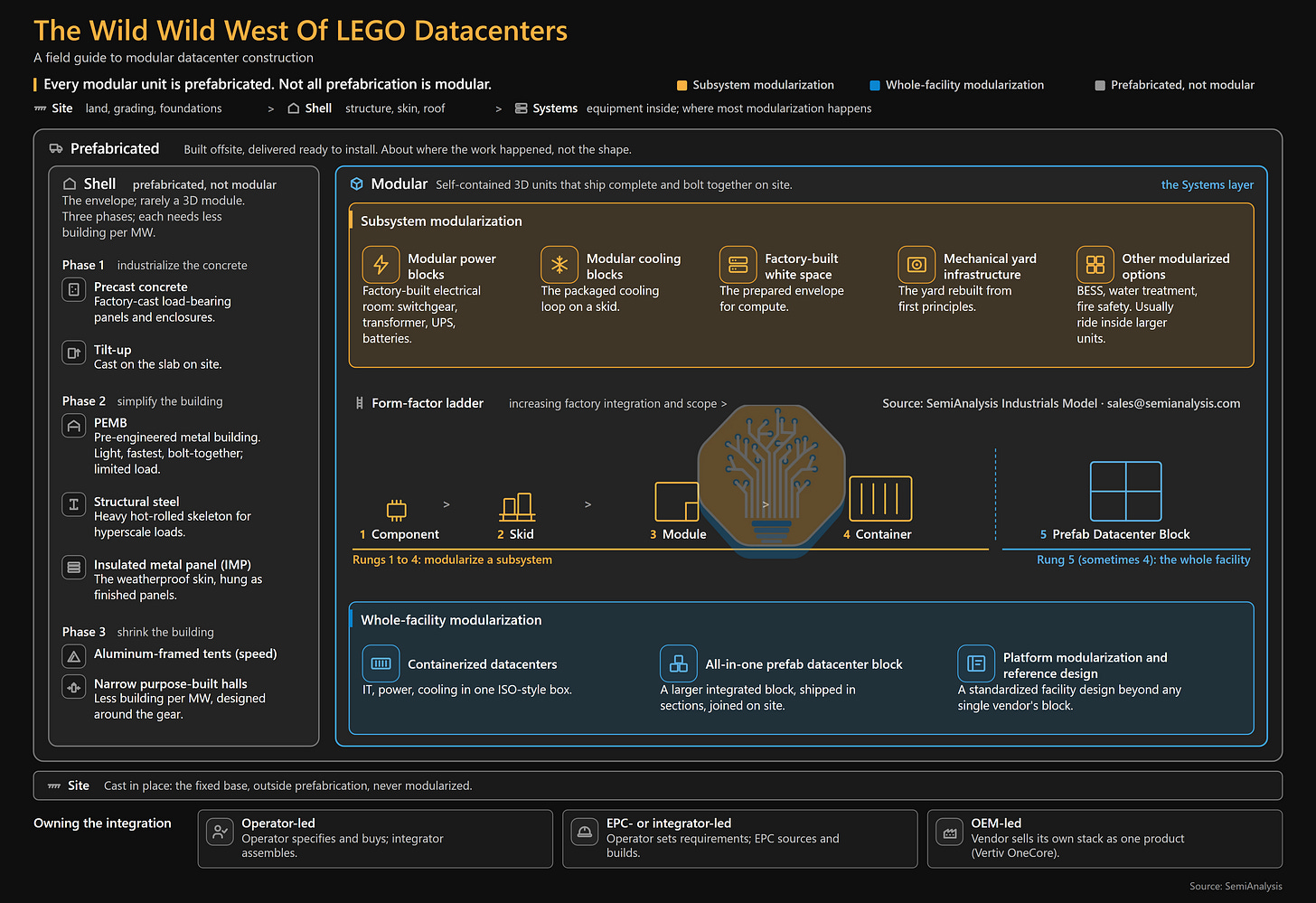
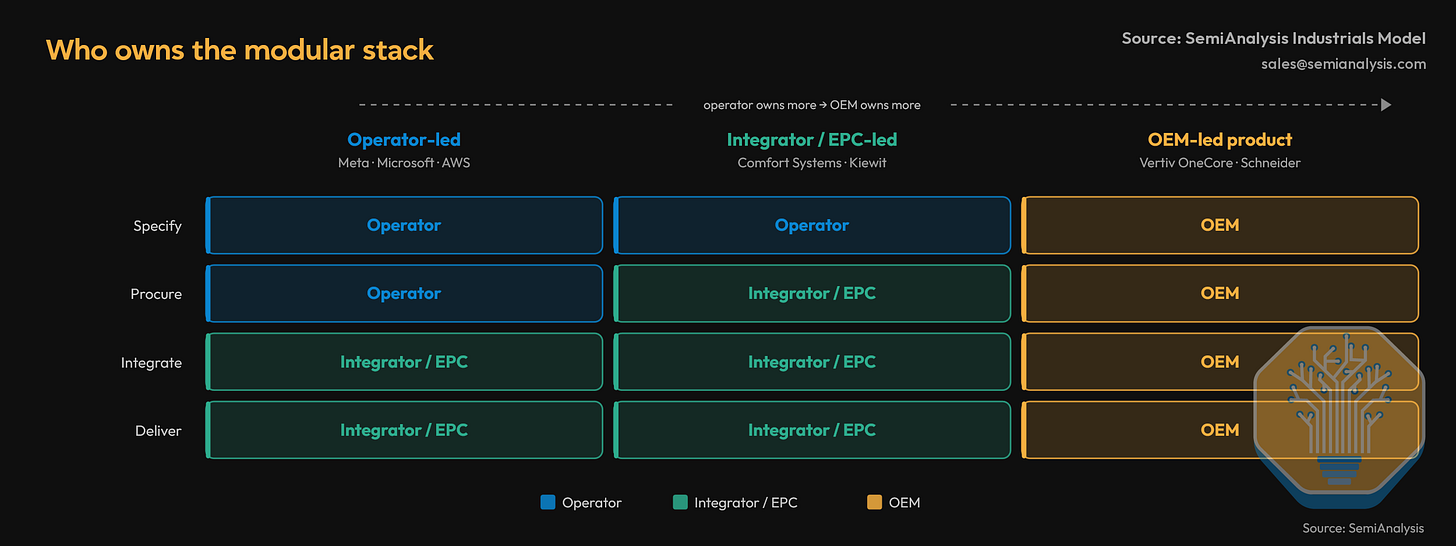
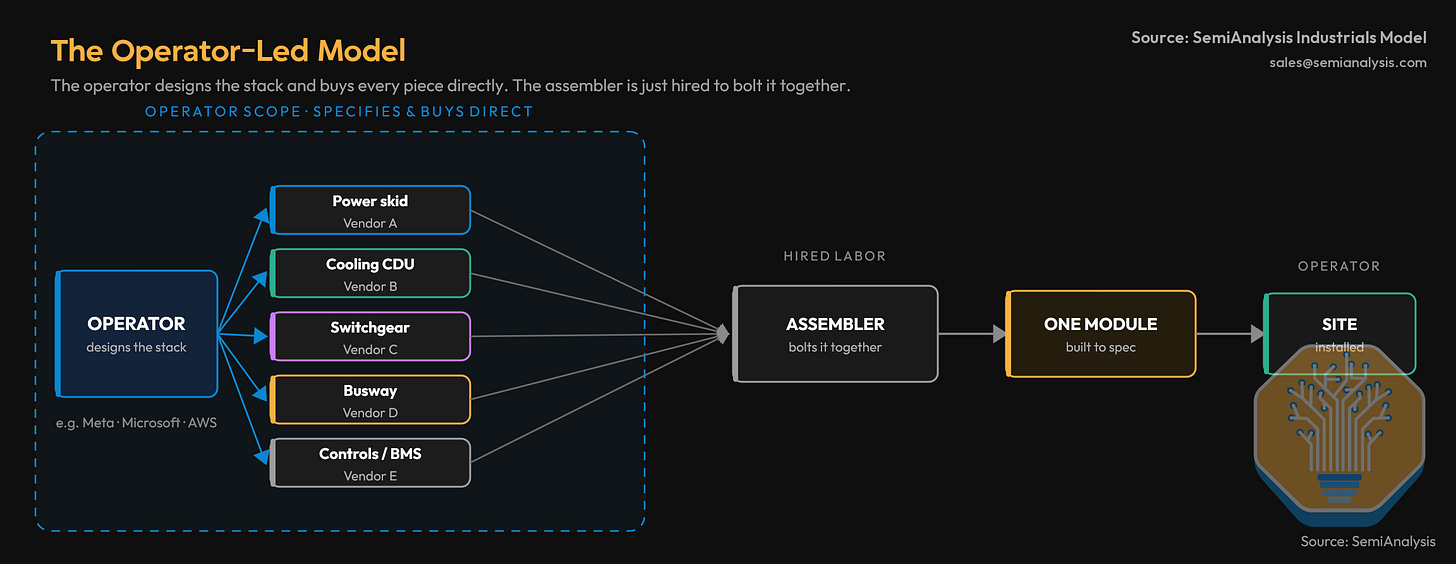
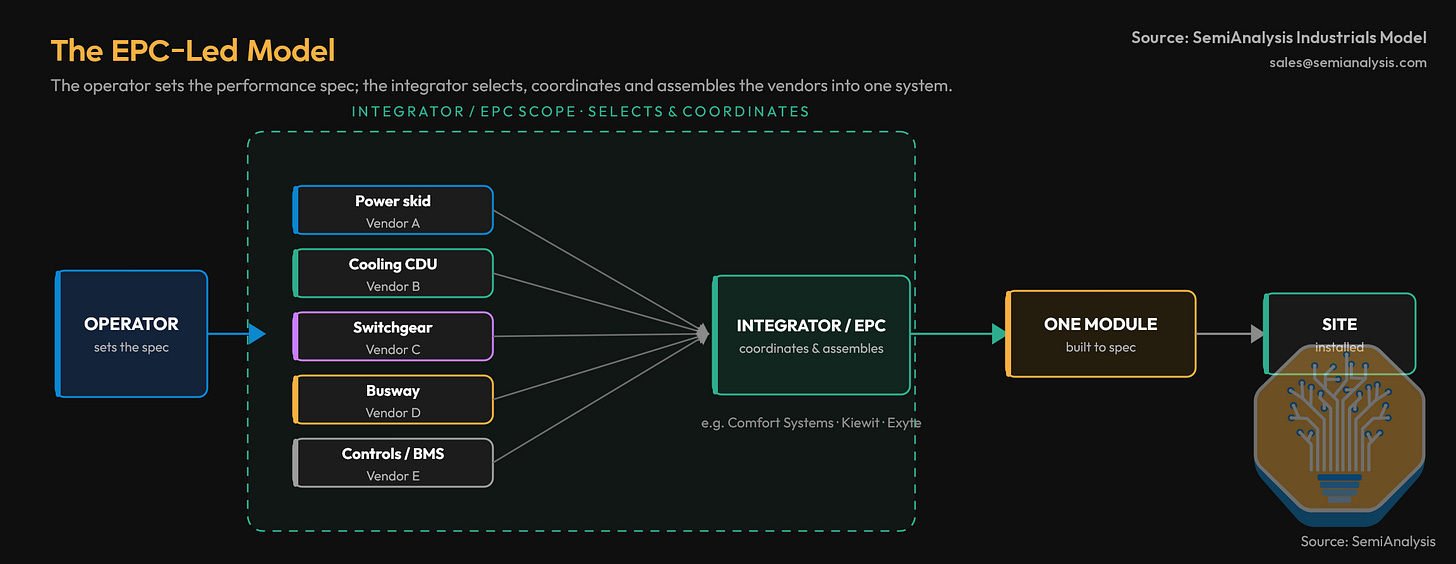
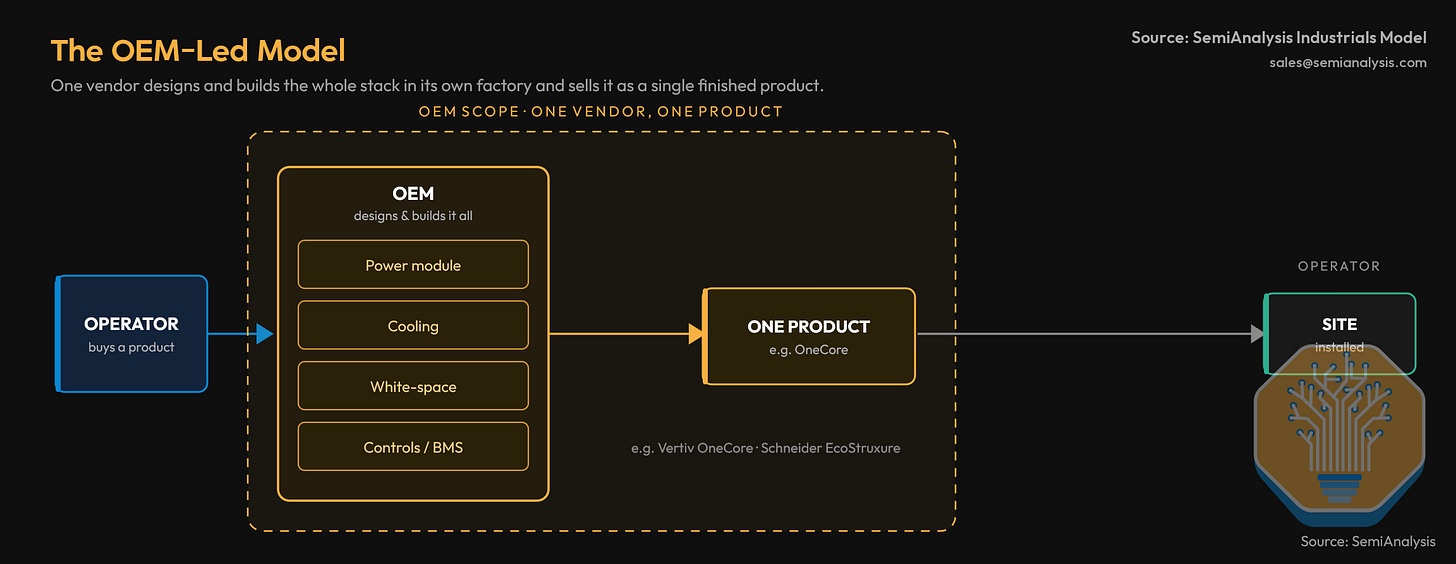
The vendor landscape above maps who builds each piece, but not how those pieces become a module or who is on the hook when they do. From the solution provider’s point of view it has three answers:
At one end the operator holds both rights: it specifies the equipment, buys it directly, and hands it to an integrator purely for assembly.
In the middle sits the EPC- or integrator-led buildout, where the operator still sets the performance requirements but hires an EPC or integrator to source, coordinate, and build.
At the far end is the OEM-led model, where a vendor like Vertiv designs and sells its own stack as one finished product, as it does with the OneCore portfolio
Source: SemiAnalysis Industrials Model
Operator-Led Modularization
This is where the operator engineers the specification themself, procures the equipment directly as owner-furnished gear, and hands it to an integrator purely for assembly.
This model requires the operator to have a deep in-house engineering and procurement team to specify and source every component, and the willingness to carry all of the cost, inventory, and lead-time risk.
Source: SemiAnalysis Industrials Model
In a supply-constrained market that risk is sharp, since the operator is competing for scarce transformers and switchgear without a vendor’s allocation leverage, unless it buys at enough scale to have that leverage of its own.
这就是为什么运营商主导的模块化实际上仅限于最大的超大规模云服务商。以 AWS 为例,它在 Project Houdini 项目下自主研发预制化数据中心模块,并直接采购设备,同时将 Cupertino Electric 作为设计合作伙伴。
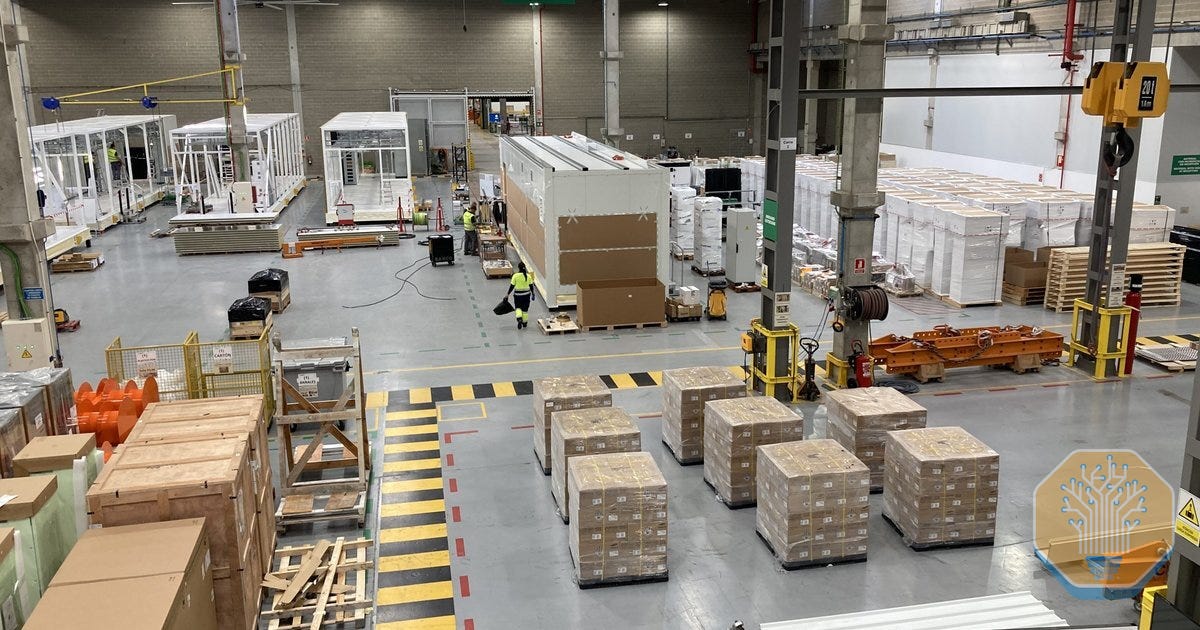
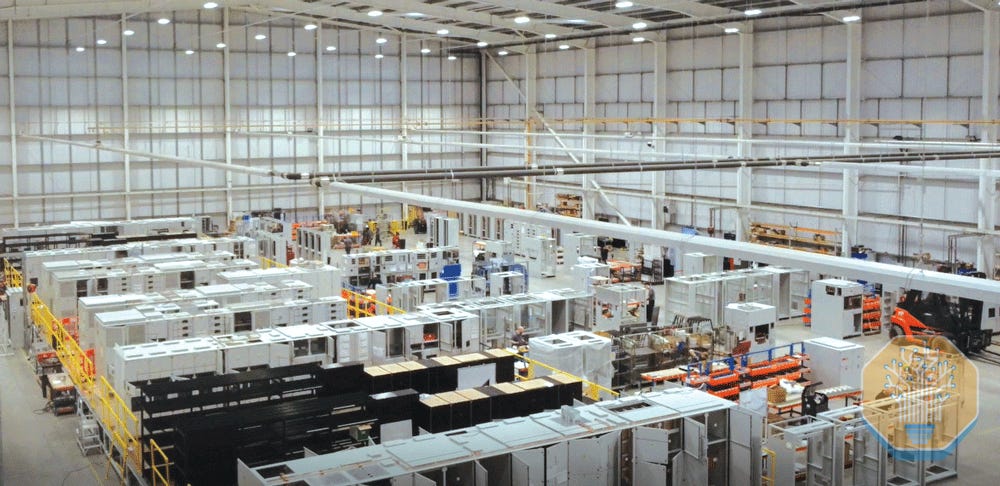
以 Comfort Systems 为例。它是一家机电承包商,并非设备制造商。因此,它扮演着代表运营商采购并组装设备的角色。运营商决定所需设备,其他所有工作均由 Comfort Systems 完成。该公司通过 Environmental Air Systems 和 TAS Energy,在德克萨斯州和北卡罗来纳州超过 350 万平方英尺的厂房内开展这些工作。
这种理念对超大规模云服务商极具吸引力。大型运营商通常已确切知道所需的设备与设计,因此无意购买他人固定的系统。通过与 Comfort Systems 这类 EPC 集成商合作,运营商得以保留自有设计和设备,仅将建造过程从施工现场转移至工厂完成。
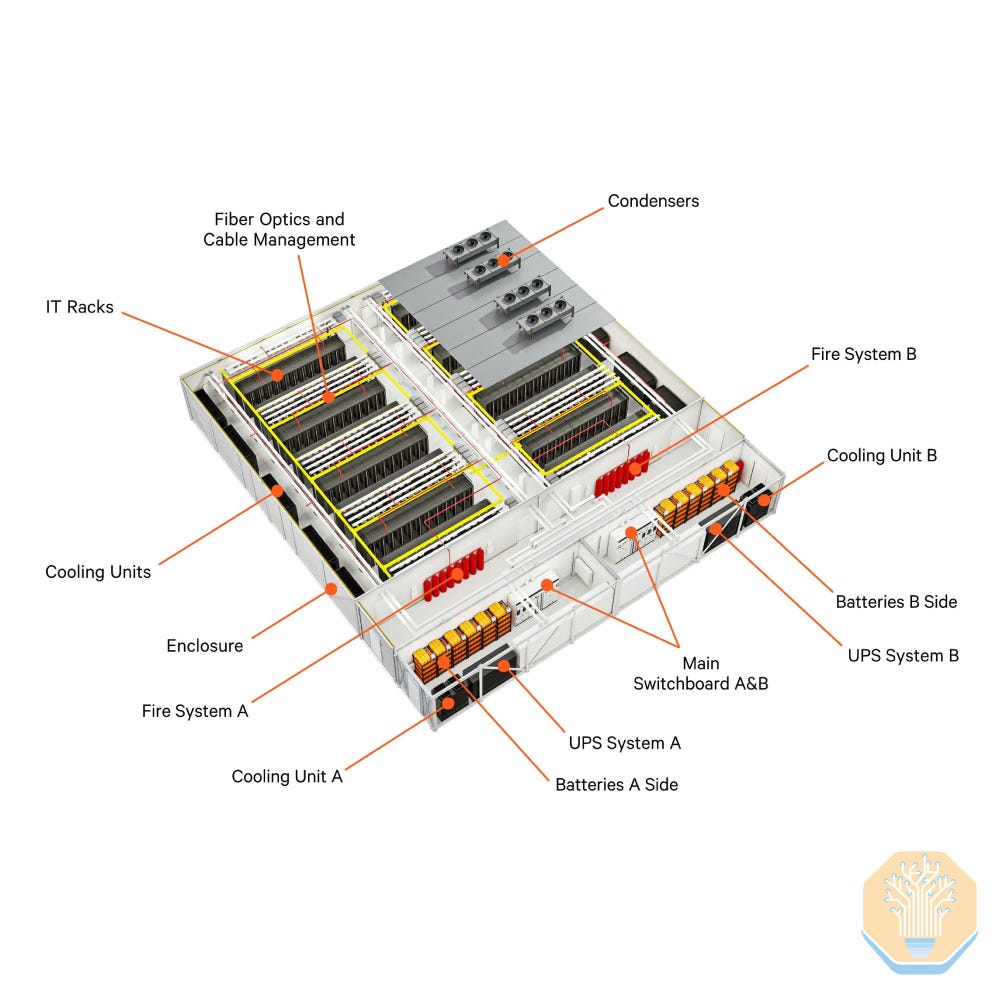
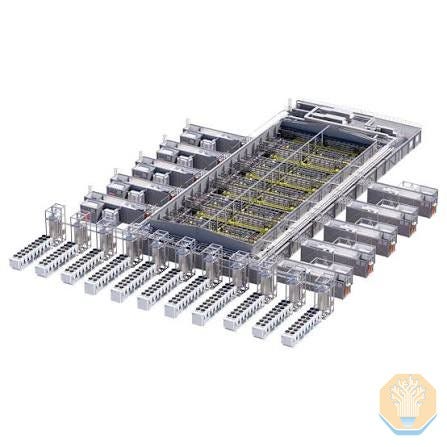
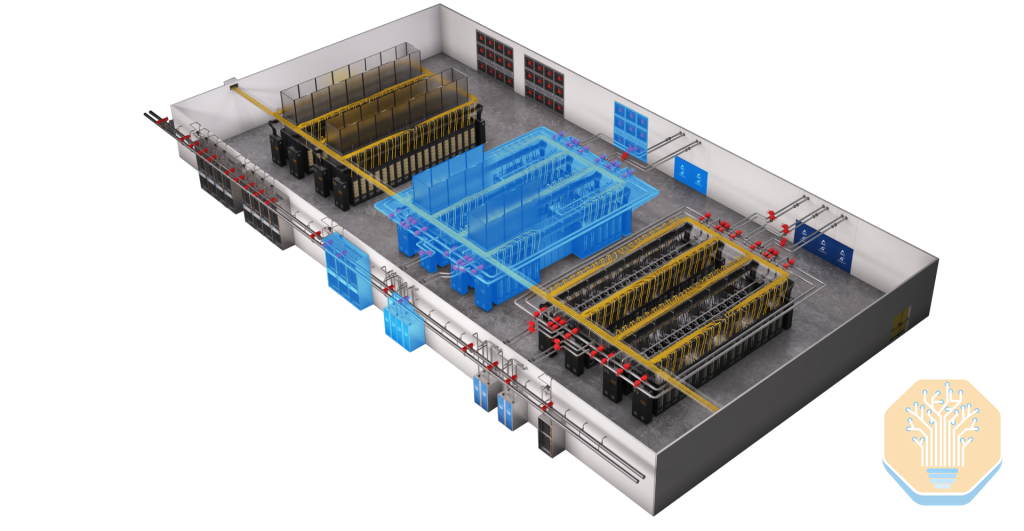
Vertiv OneCore is a clear example. Instead of selling single equipment devices, Vertiv combines all the layers into a single modular platform. This platform integrates Vertiv’s power, thermal, cooling, and IT infrastructure technologies inside a Vertiv’s supplied steel shell.
Source: Vertiv
That is what makes it OEM-led, the customer is buying into Vertiv’s entire integrated stack rather than asking an EPC integrator to assemble equipment line ups. This also allows Vertiv to capture higher content by selling the entire stack end to end, with the TAM expanding up to ~$7M/MW for some of their full-stack solutions.
The tradeoff is capacity and execution risk. Besides the fact that these companies are going up the value-chain toward market segments they were not previously involved in, OEM-led modularization can only scale as fast as the OEM’s factory capacity, supplier base, and integration teams can support. Vertiv’s modular solutions run lead times of over 12 months today. This is also pushing big OEMs, not only Vertiv but also companies like Schneider and Siemens, to be selective with capacity slot allocation, requiring certain capacity minimums and favoring bigger projects. As a result, operators or developers looking for smaller scale capacity are increasingly working with the System Integrators.
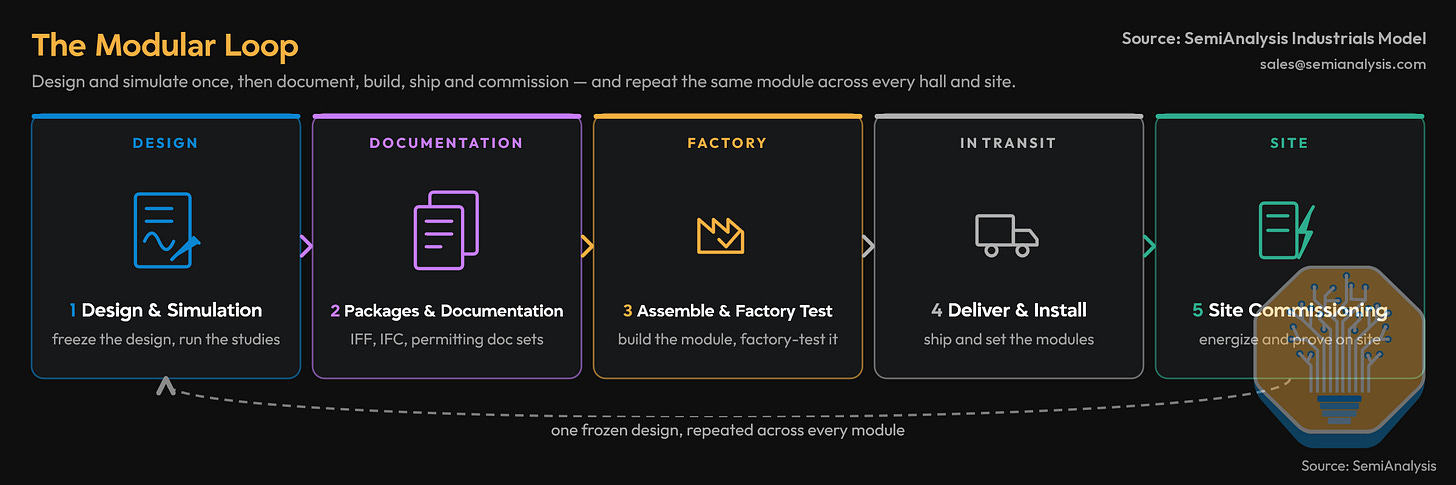
The Modularization Cycle
By now our readers should be familiar with the different forms of modular solutions and the players leading this transformation. They will also have noticed how different this looks compared to traditional datacenter construction, and will have many questions about the operational implications. Those are the topics we address in this section.
Source: SemiAnalysis Industrials Model
Stage 1: Solution Design and Simulation
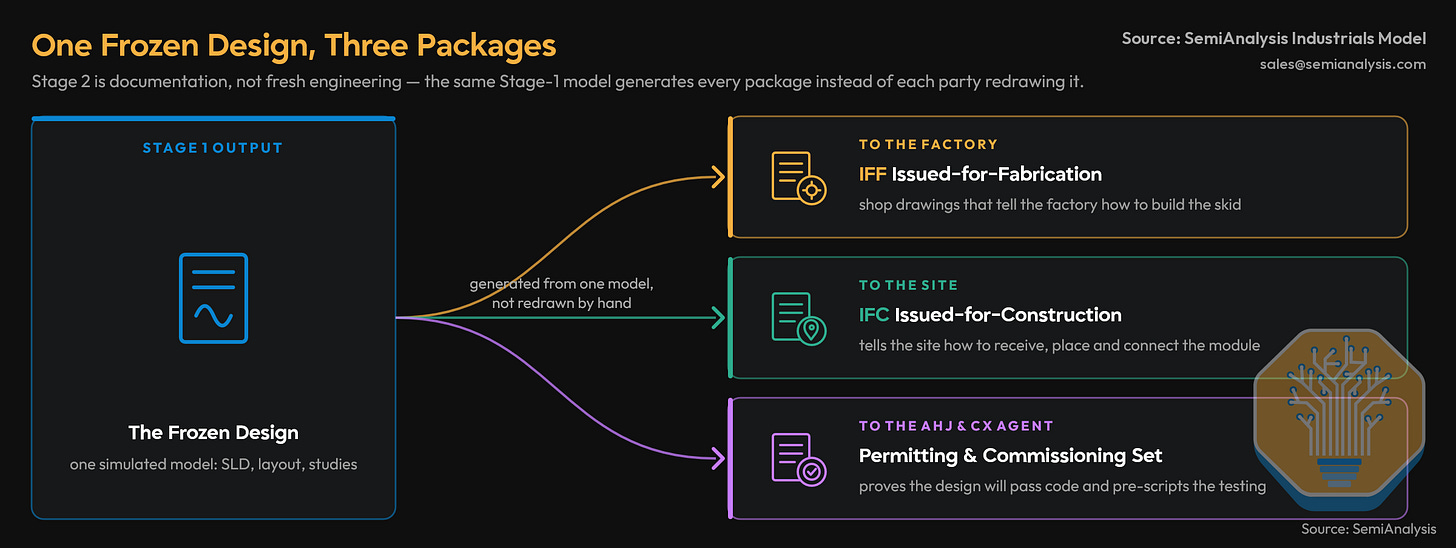
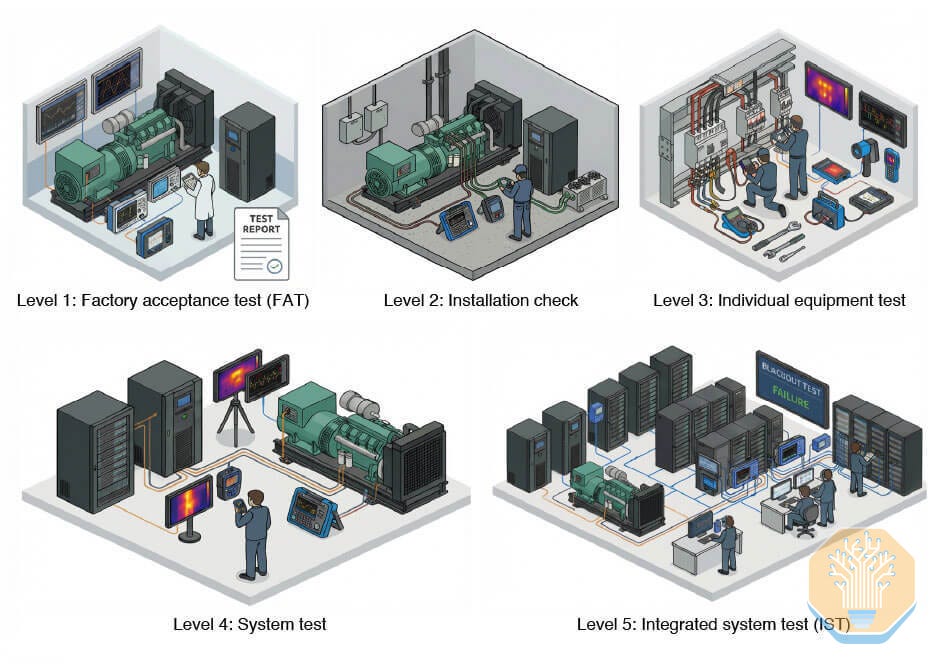
Engineering the solution is the first step. In a field build, some of these decisions can change while construction is underway. In a modular build however, they need to be predetermined, frozen early, and repeatable since the box itself must come in a finish block.
The most important engineering at this stage happens at the facility level. Before a module can be finalized, the design team must define the load, select the equipment, develop the single-line diagram (SLD) and layout, and complete the short-circuit, protection-coordination, and arc-flash studies in tools like ETAP and PSSE. These analyses determine how the system is sized and which components can be used. Because they depend on the full electrical path from the utility connection through the downstream equipment, they cannot be completed on an isolated skid. The facility design therefore has to come first, with the module designed as part of that broader system.
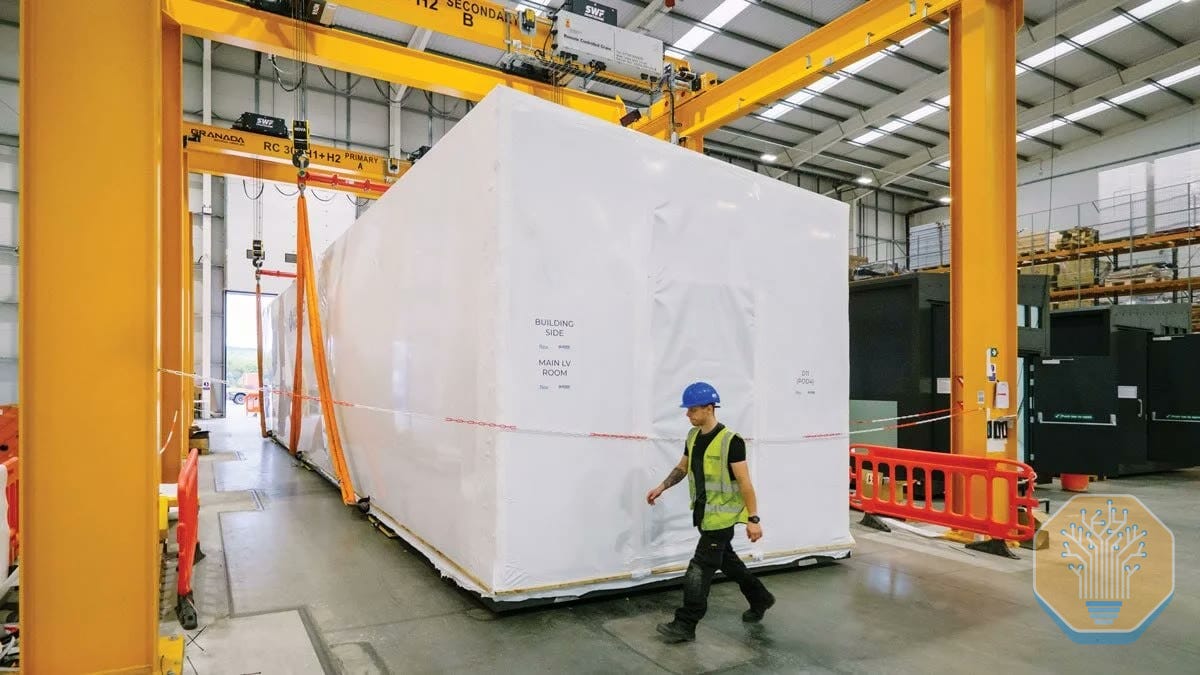
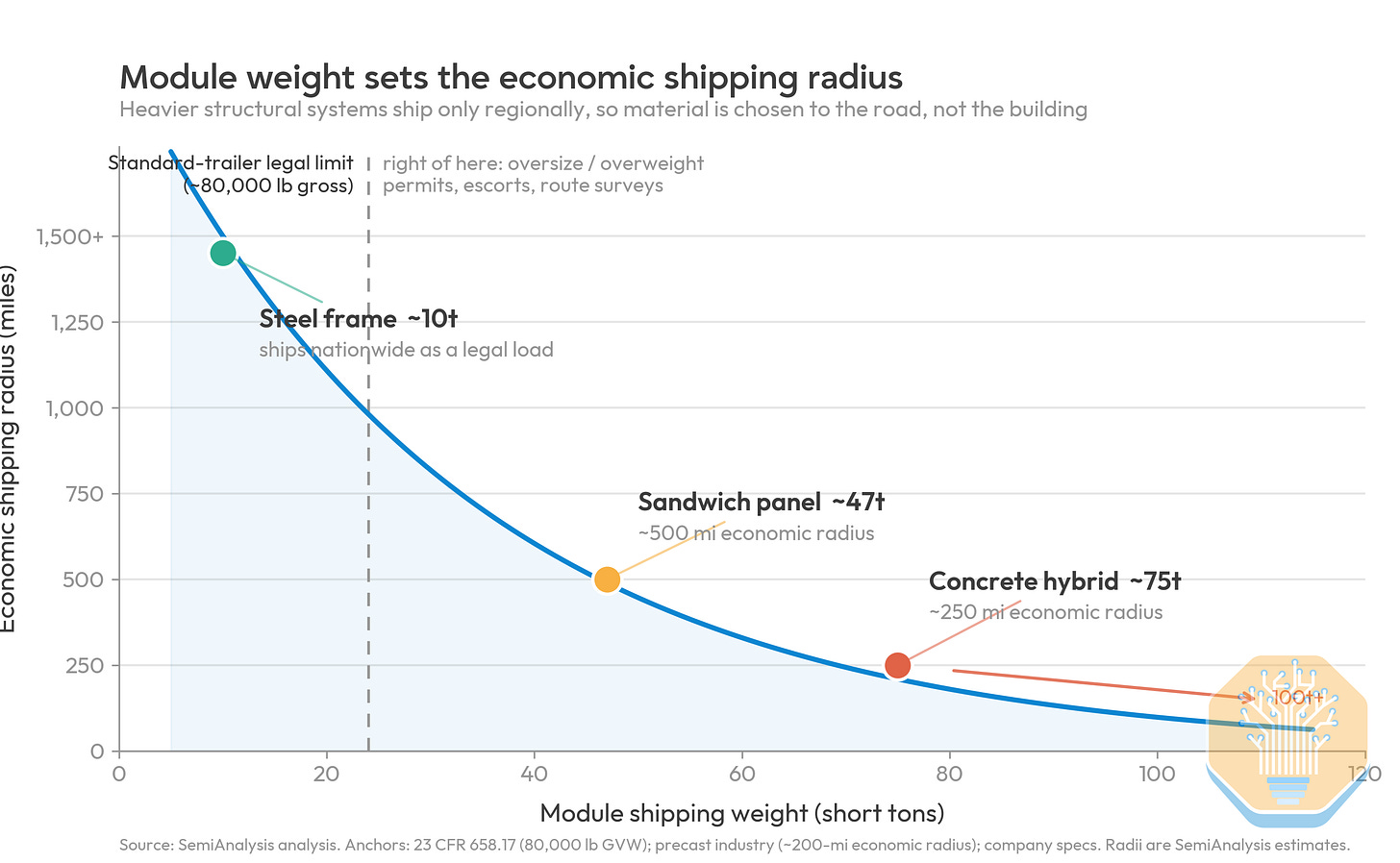
运输环节也成为了可靠性评估的一部分。模块在运输途中可能承受比正常运行时更大的机械应力,尤其是在振动、制动和装卸过程中。在一次验证测试中,Aligned DC 将一台 3 MW 的模块从 Utah 运往 Omaha 并运回,同时使用了受力记录仪来测量运输过程中所经历的实际受力状况。
除此之外,运输还会因保险问题而受到限制。高价值的 AI 机柜每次可能只能发运一两个,因为将过多设备集中在一辆挂车上会造成不可接受的保额损失风险,没有保险公司愿意承担这种风险。这种风险并非理论假设。我们曾了解到,有卡车载着大型 UPS 模块在前往 Northern Virginia 的途中,于 West Virginia 路段发生侧翻,导致了巨额赔付。
考虑到上述种种影响,运营商在工程设计时会设法适应长途运输需求。例如 AWS 将 Houdini 的滑橇设计为可放置在低底盘双降式挂车上,以便顺利通过桥下。Nautilus 则利用驳船将其数据中心漂浮运输 50 英里至 Port of Stockton,Compass 更是在其 Red Oak 园区旁直接建了一座 Schneider 模块工厂。尽管如此,部分运营商如 DXN 确实能做到将集装箱从其位于 Western Australia Perth 的工厂一路运抵美国。不过这些大多是较小的集装箱。
在 New Jersey 园区,该设施通过 Nebius 与 DataOne 的合作,按 Nebius 自有设计建造,并规划为可分阶段扩展至 300 MW 的开发项目。公司采用预制结构组件来加速外壳建设,同时结合 Bloom Energy 的表后燃料电池作为电力解决方案。
Source: NJ.com, Nebius/DataOne New Jersey
At Béthune, France, the company follows the same operating logic through a different construction method. The project reuses the former Bridgestone tire plant, avoiding part of the greenfield shell and permitting process. Azur Datacenter is responsible for the land, utility intake, construction, and physical plant, while Nebius focuses on the GPUs, racks, networking, and software.
Colocation Providers
Compass
Compass is the colo that has run the modular playbook longest. They industrialize the whole facility into a repeatable kit of parts, not just one subsystem. We estimate roughly 70 - 85% of each building is manufactured off-site and bolted together on site, standing up a building’s framework and roof in 18 to 21 days. The kit spans the full stack:
Shell: a rebar-free, fiber-reinforced precast shell, Compass casts itself from on-site batch plants
White space: Standardized prefabricated rack and containment systems such as using Schneider’s EcoStruxure Pod
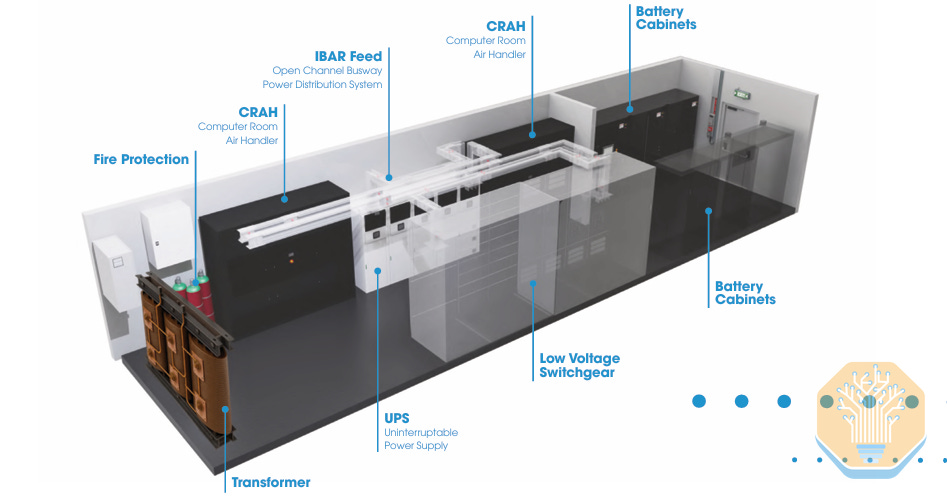
Power block: a repeatable ~1.25 MW Schneider power center (Galaxy VX UPS, lithium-ion batteries, QED-2 switchgear)
MV switchgear: modular medium-voltage switchgear skids under a Siemens deal for up to 1,500 units over five years
Source: Compass Datacenters in Red Oak
It runs this same kit across campuses, up to 360 MW at Red Oak, Texas and eight buildings across 1.8 million square feet at Goodyear, Arizona.
QTS
QTS’s modular strategy is built around locking the design early, standardizing the interfaces between vendors, and purchasing critical equipment before a specific building needs it. The company maintains roughly 7 million square feet of warehouse capacity in Kansas for long-lead equipment, allowing UPS systems, switchgear, cooling equipment, and other owner-furnished components to be held in inventory rather than ordered after each customer signs.
The approach began with the Freedom Design, which keeps the building shell flexible but repeats the power architecture. Each factory-built pod combines a 1.5 MW UPS and switchgear package with a 2.25 MW generator, and the system scales in 1.5 MW increments. Freedom LC+ expands the same concept into cooling, with an architecture that can support either fully air-cooled or fully liquid-cooled deployments. QTS’s newer rapid-deployment design pushes modularization further into the building itself, organizing capacity around repeatable 60 MW data-hall blocks.
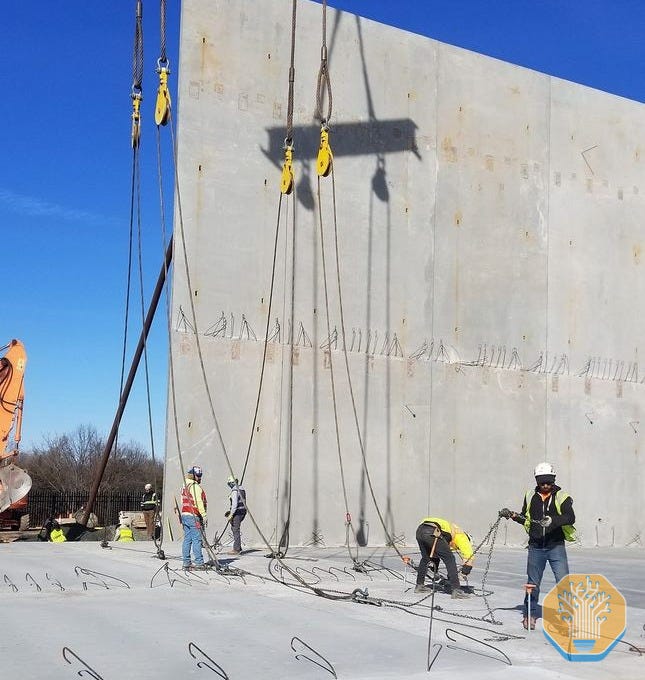
QTS has therefore continued to move more scope off-site: first the power train, then parts of the cooling system, and now portions of the shell and data hall. For the shell, some QTS facilities use tilt-up concrete, including Manassas, while larger campuses such as Cedar Rapids use structural steel.